


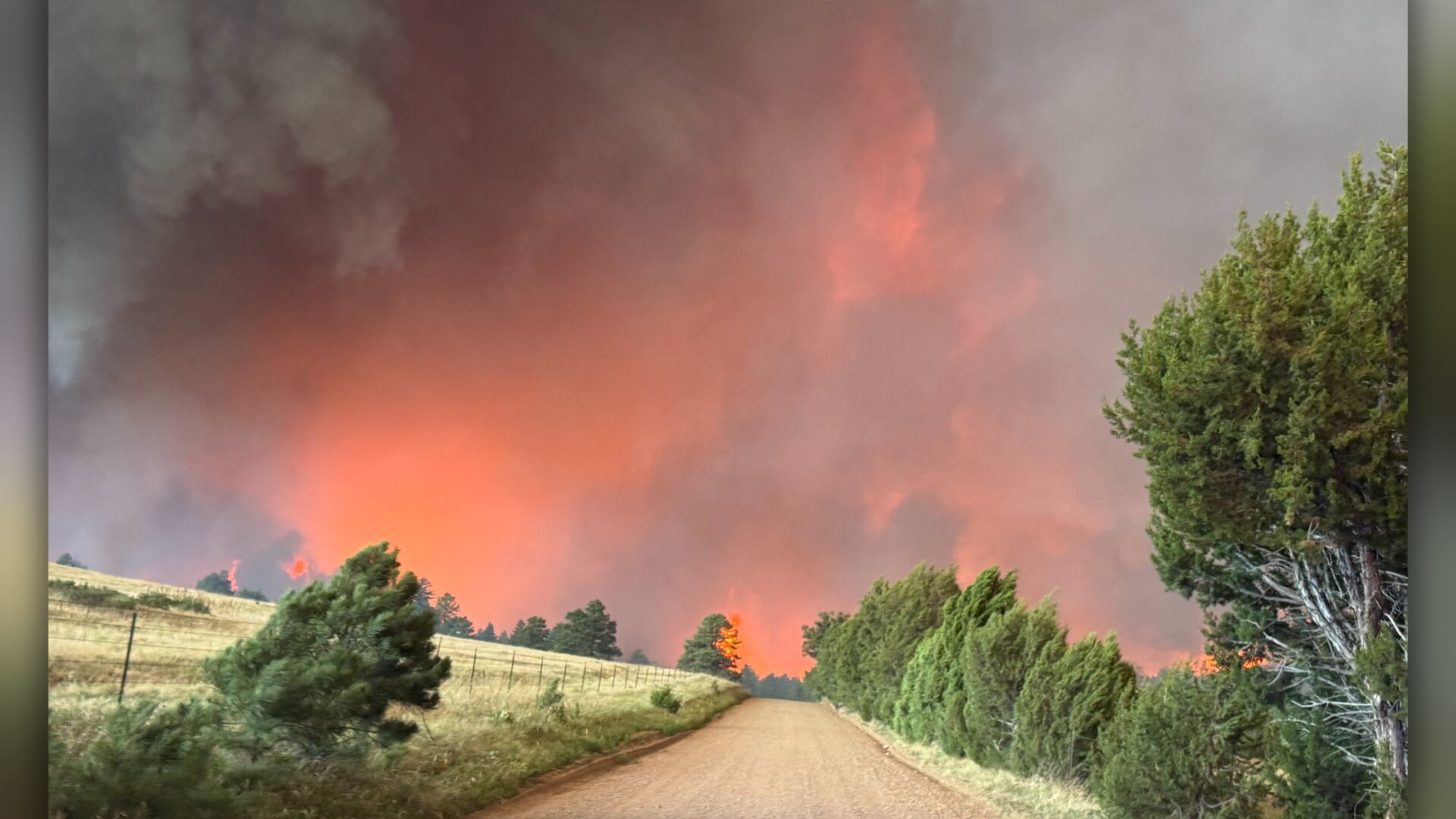
Overview of the Aspen Acres Fire
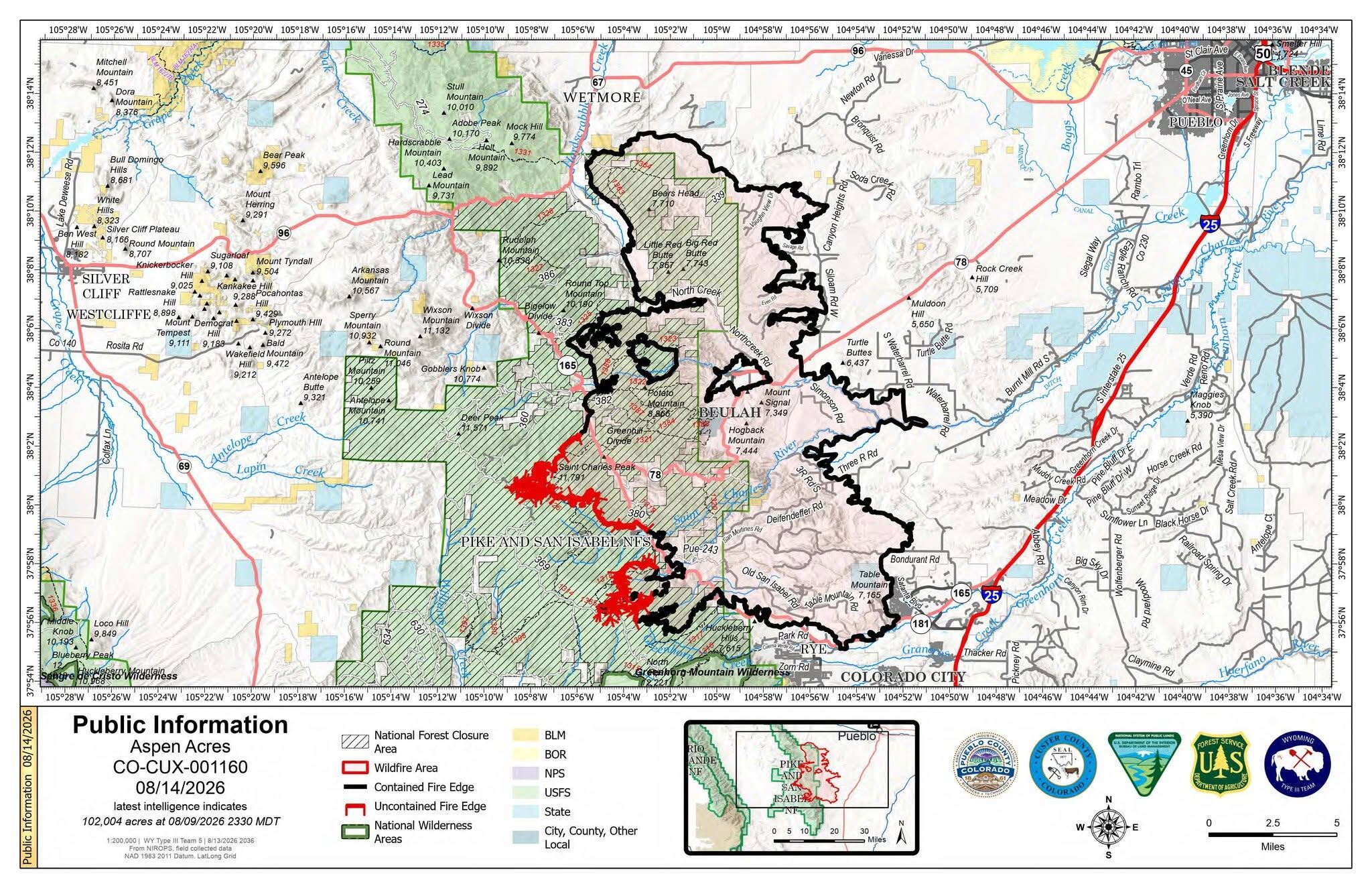
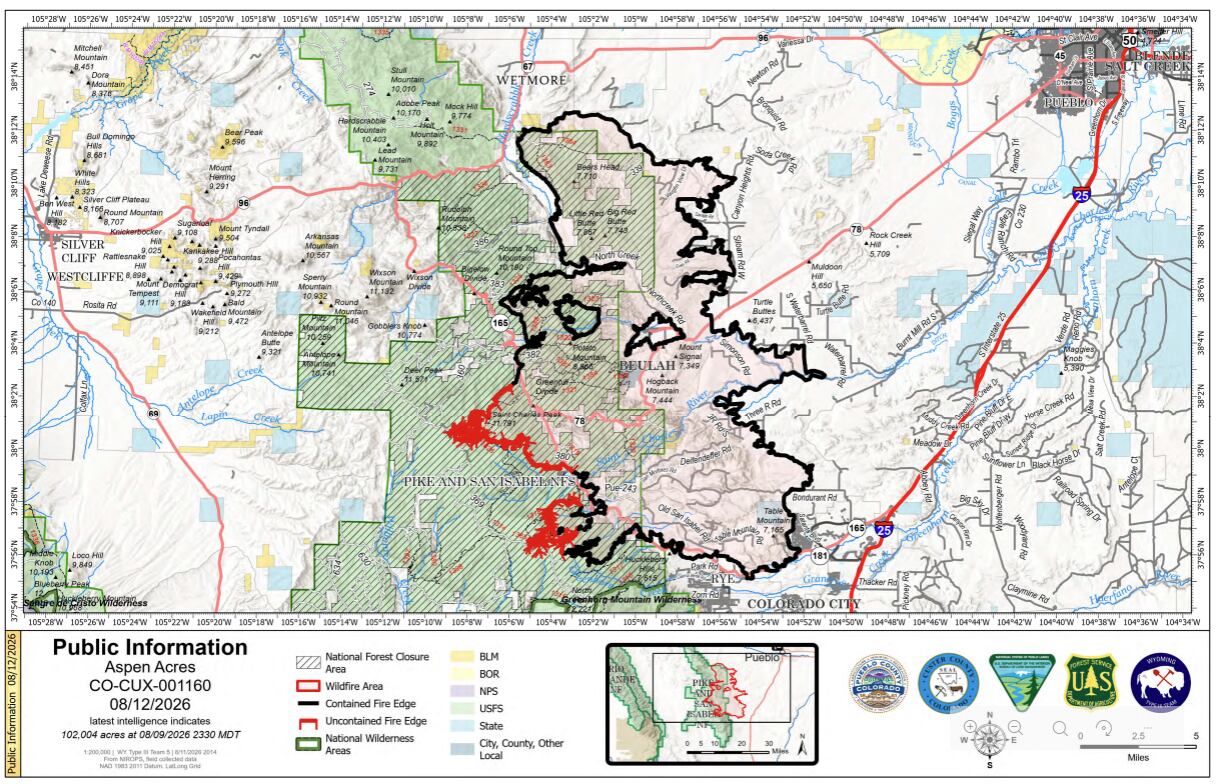
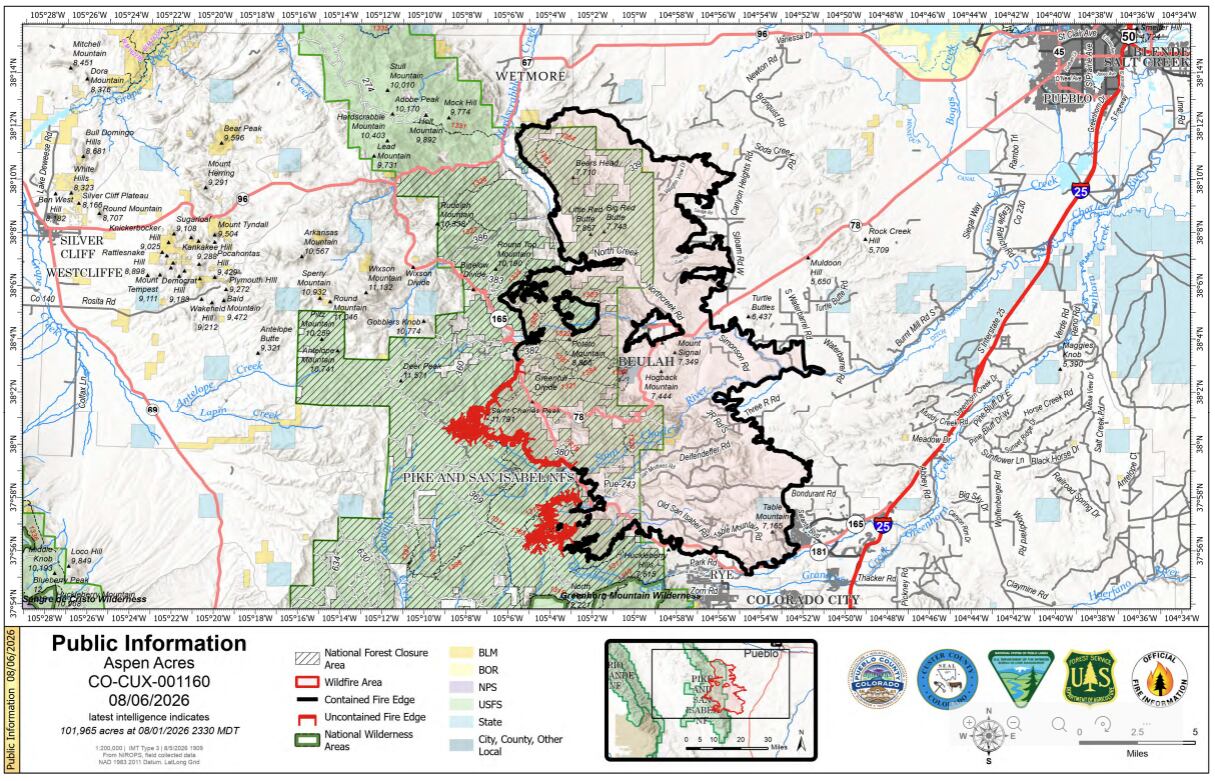
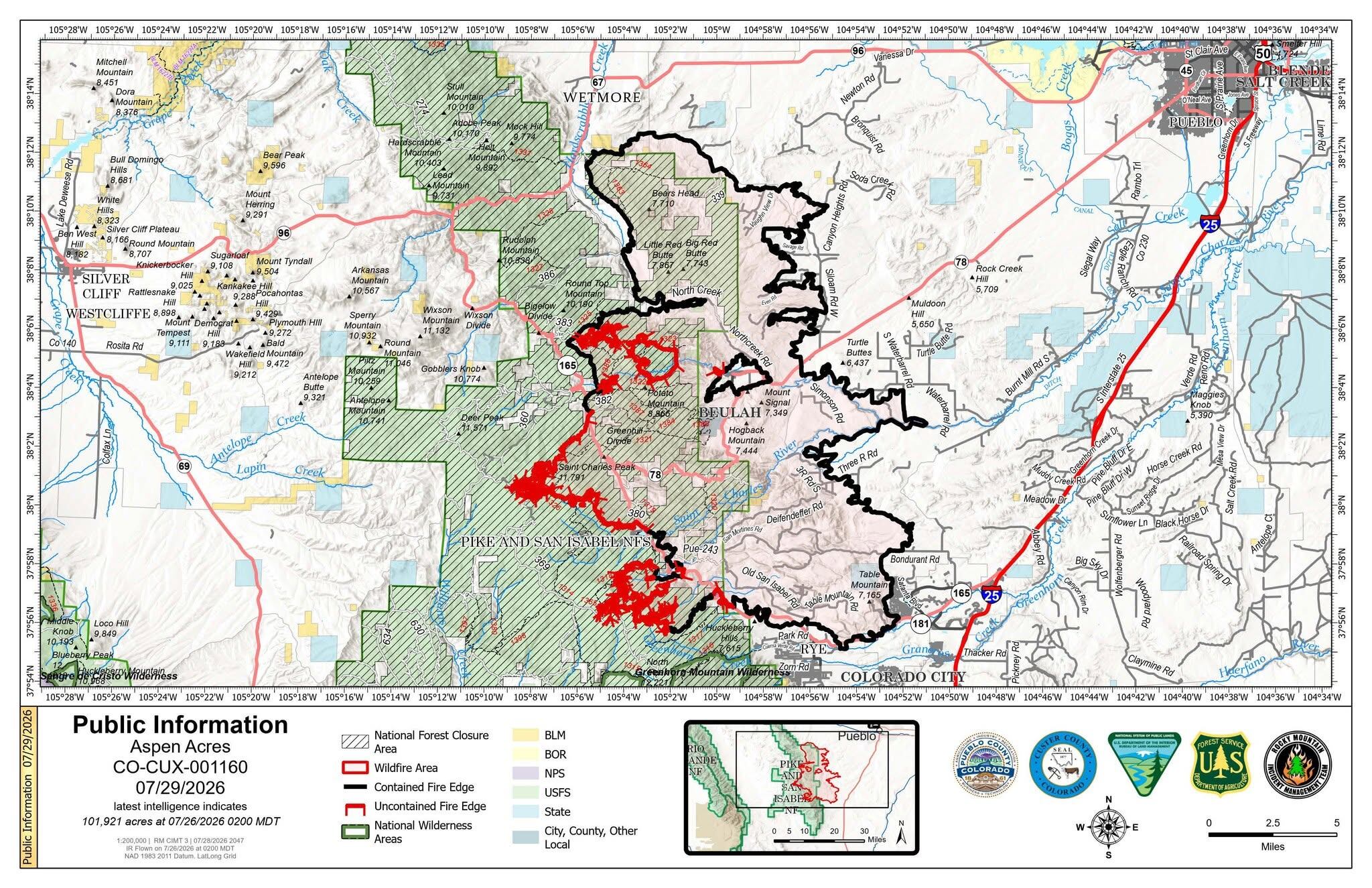
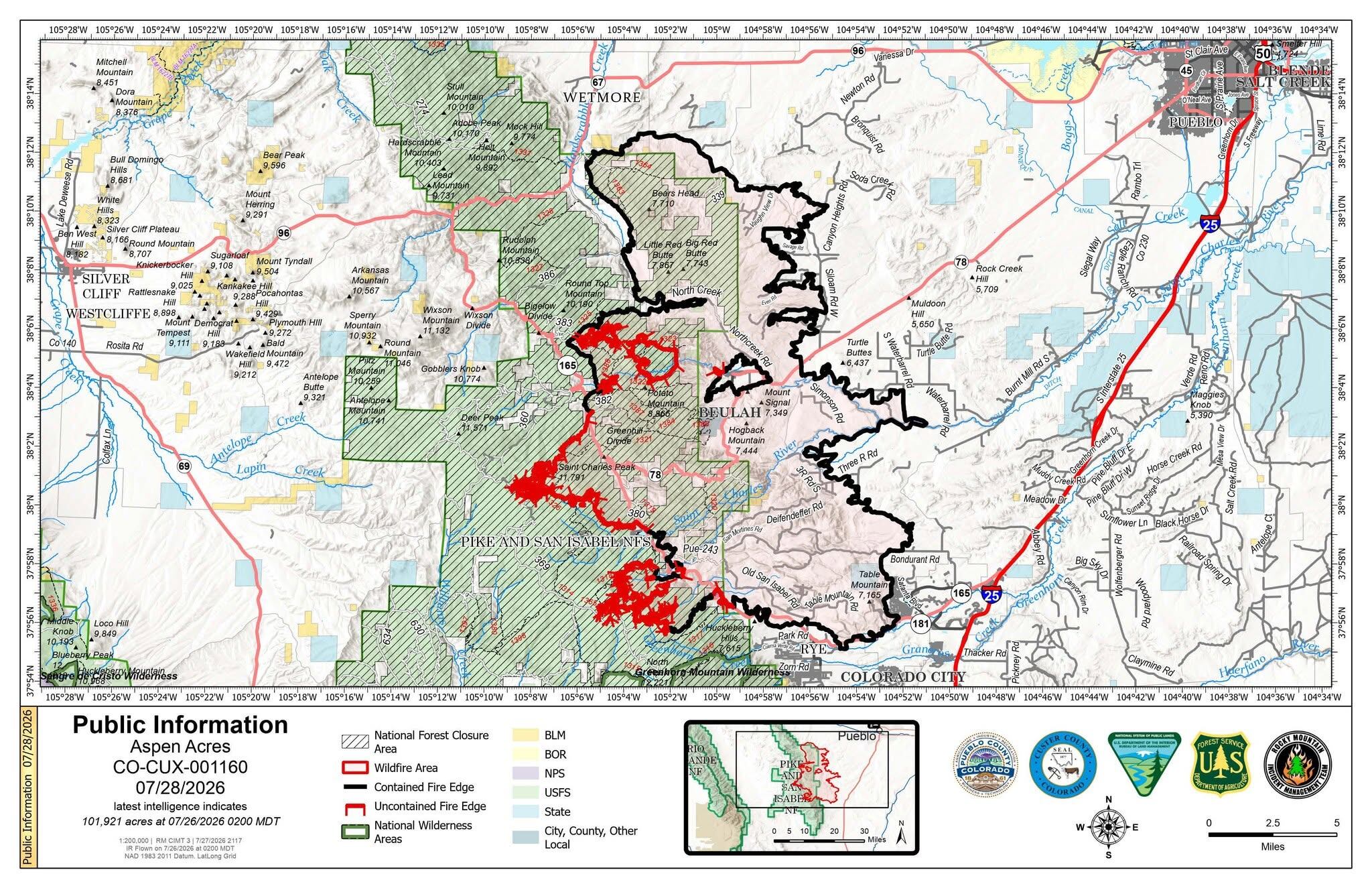
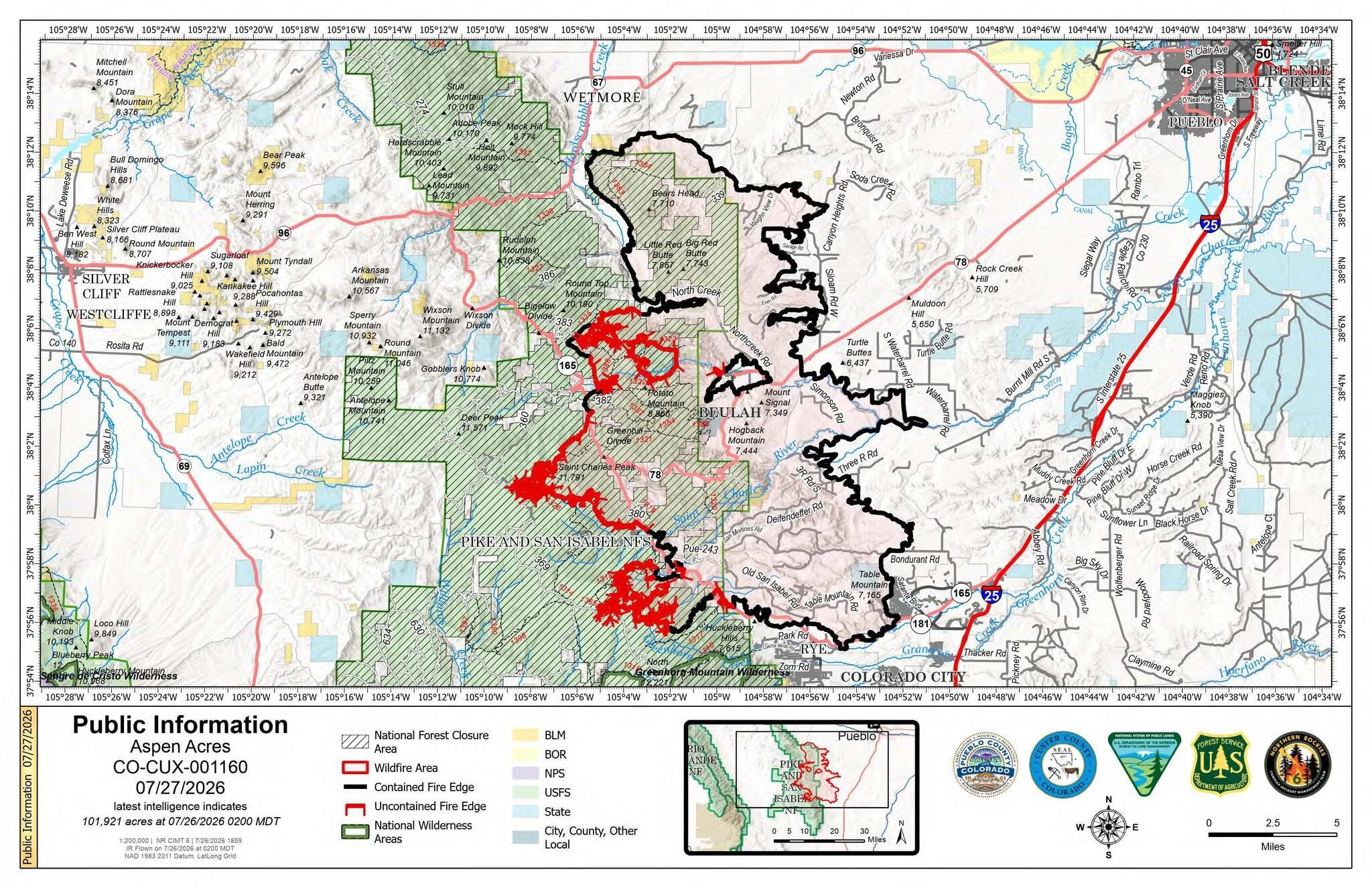
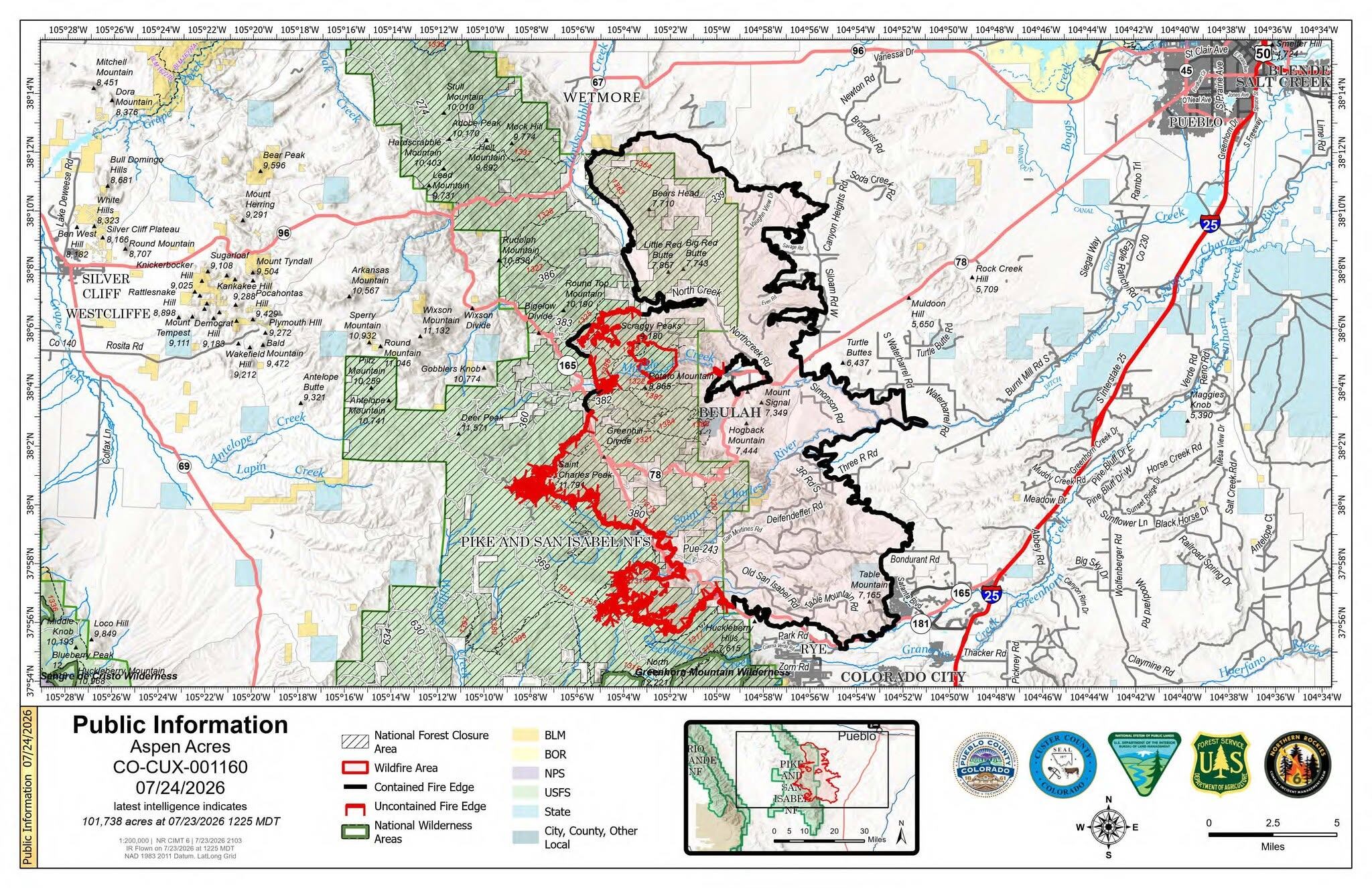
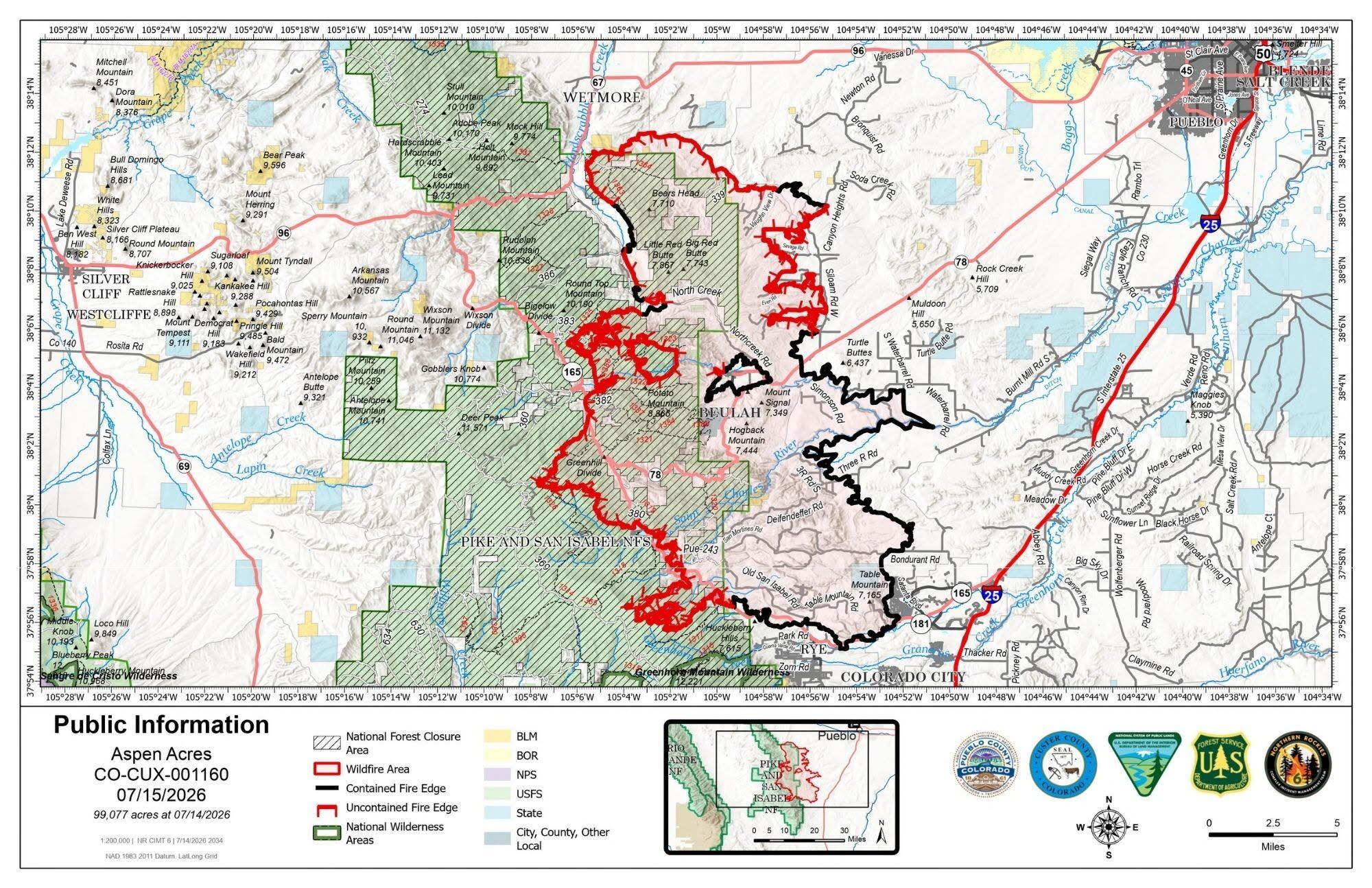
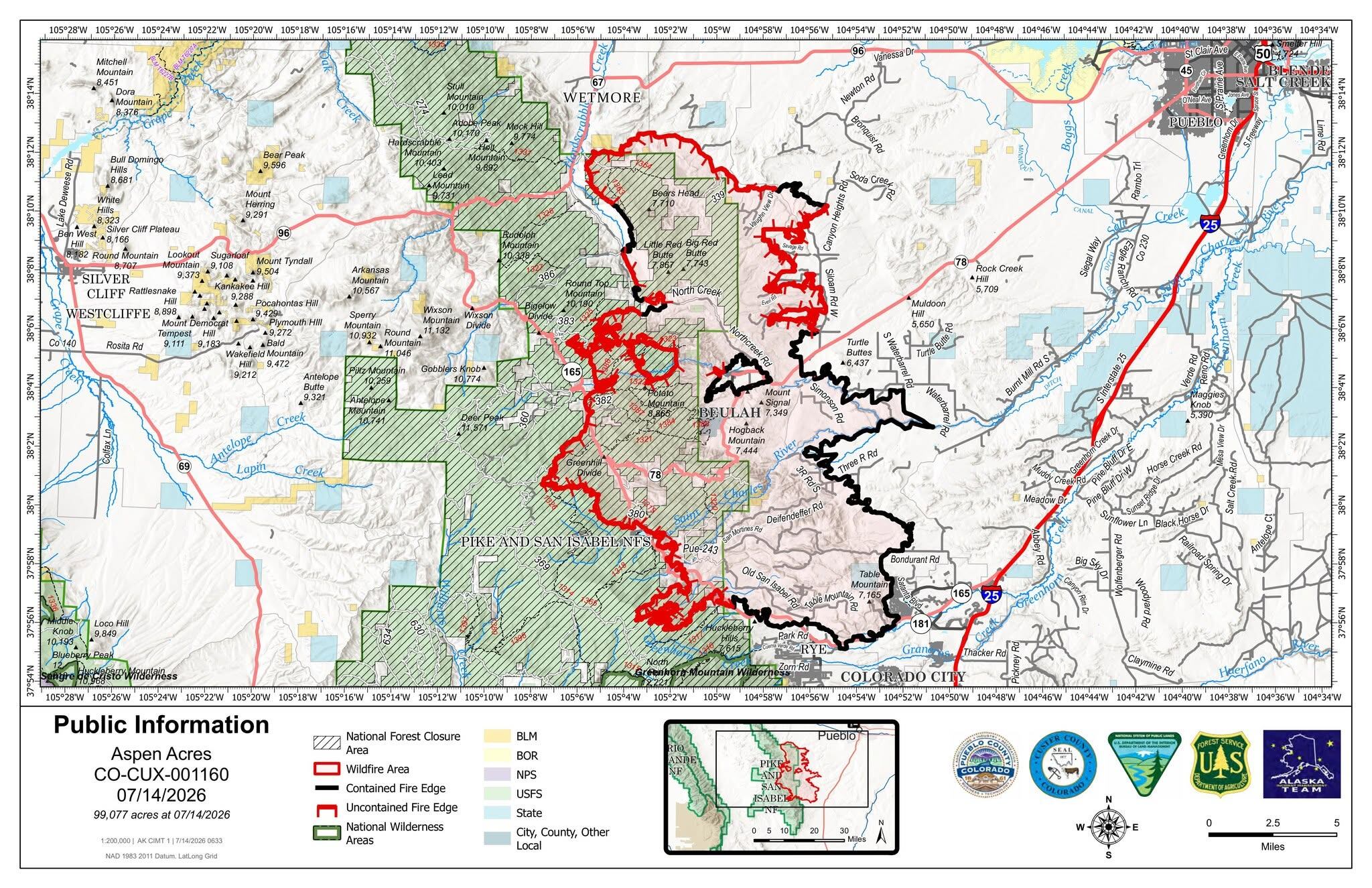
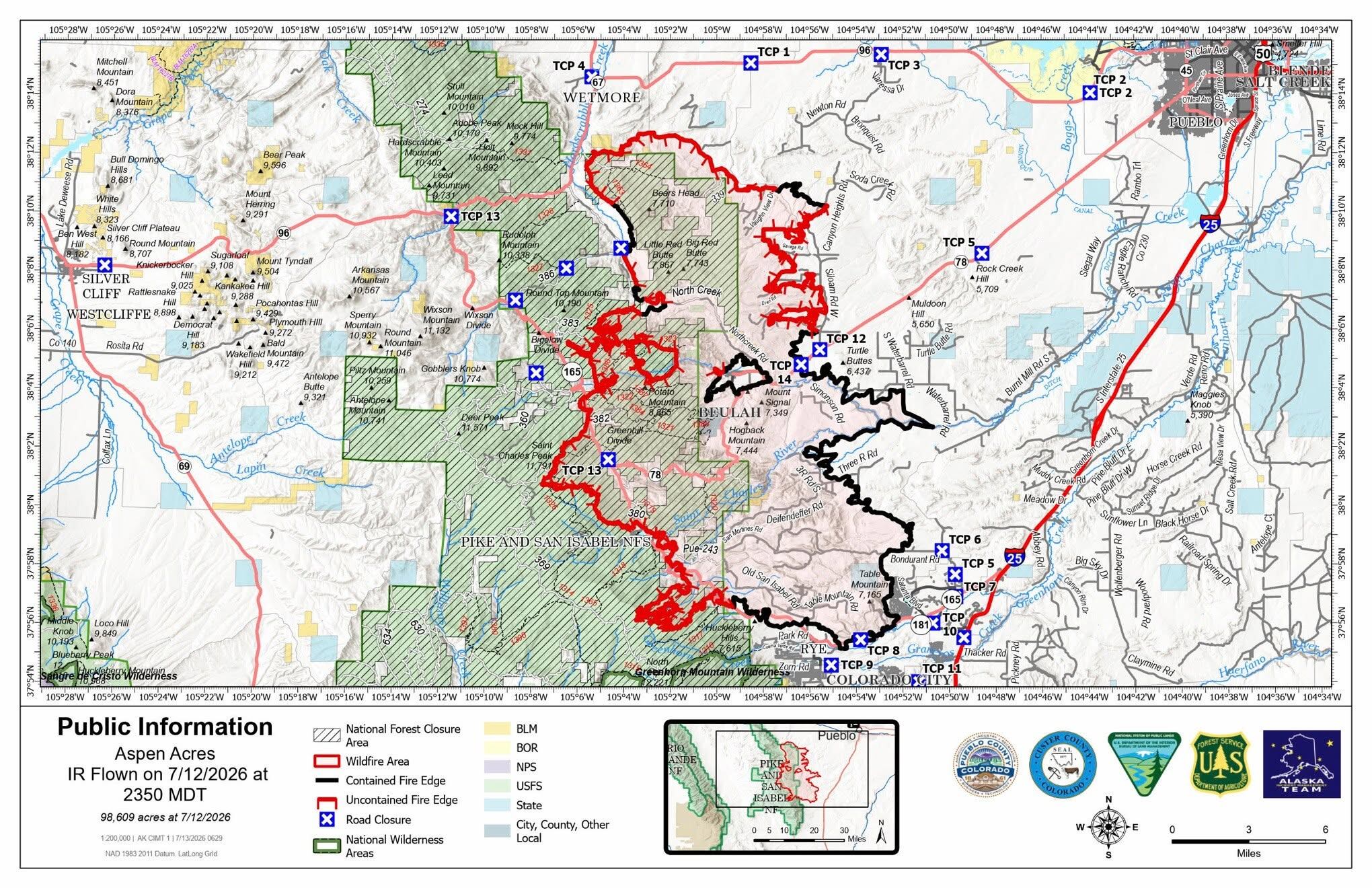
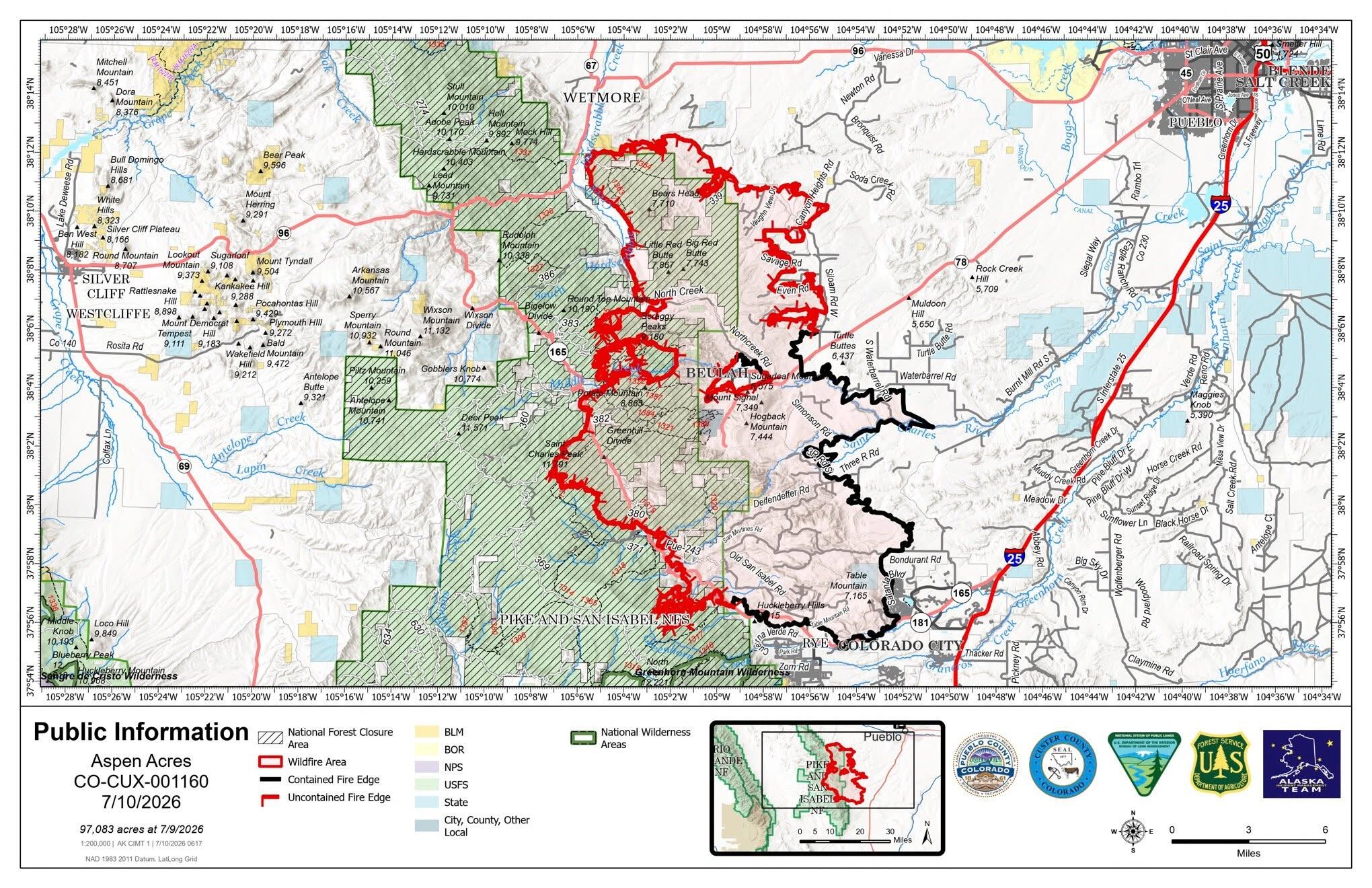
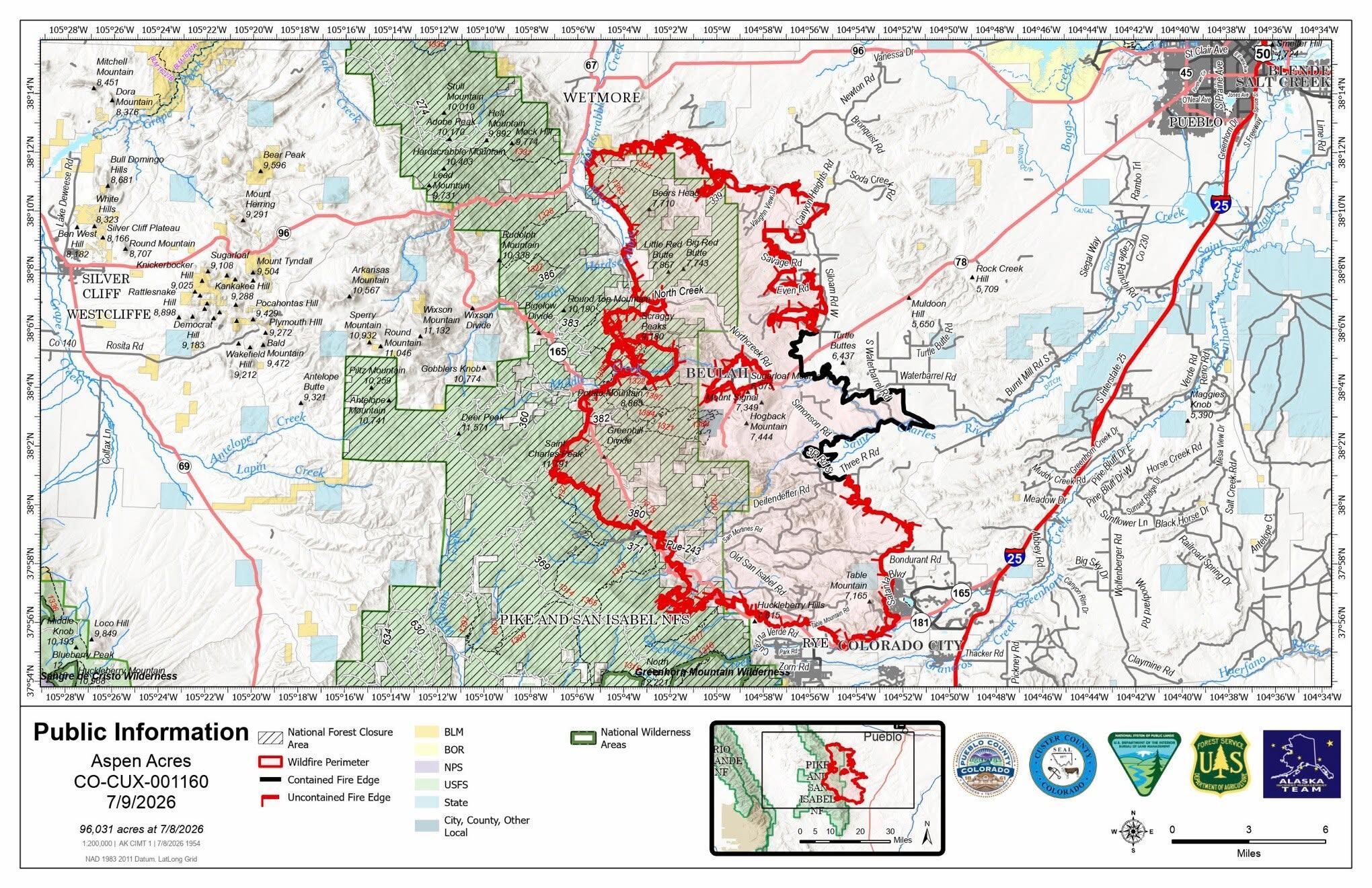
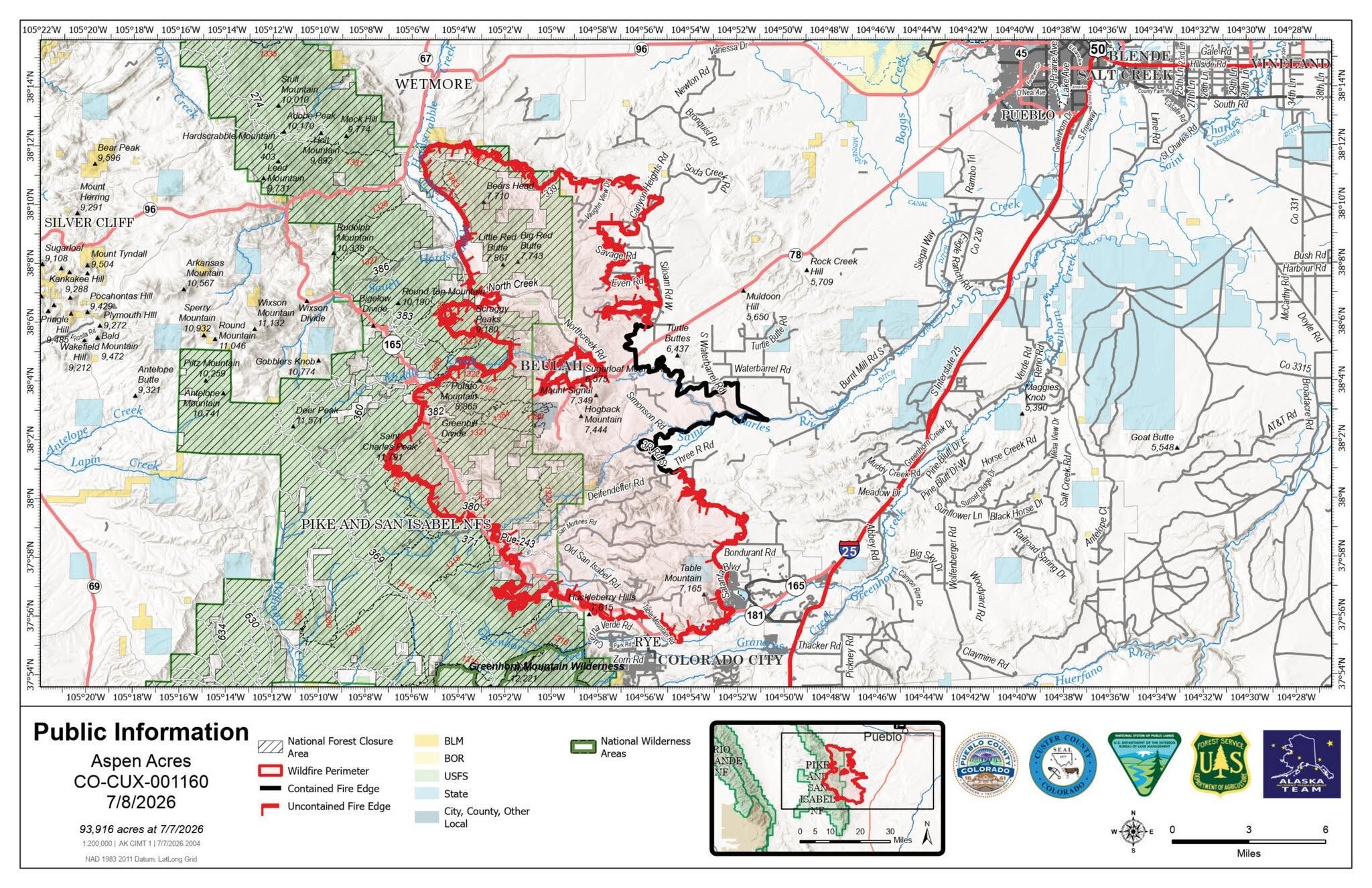
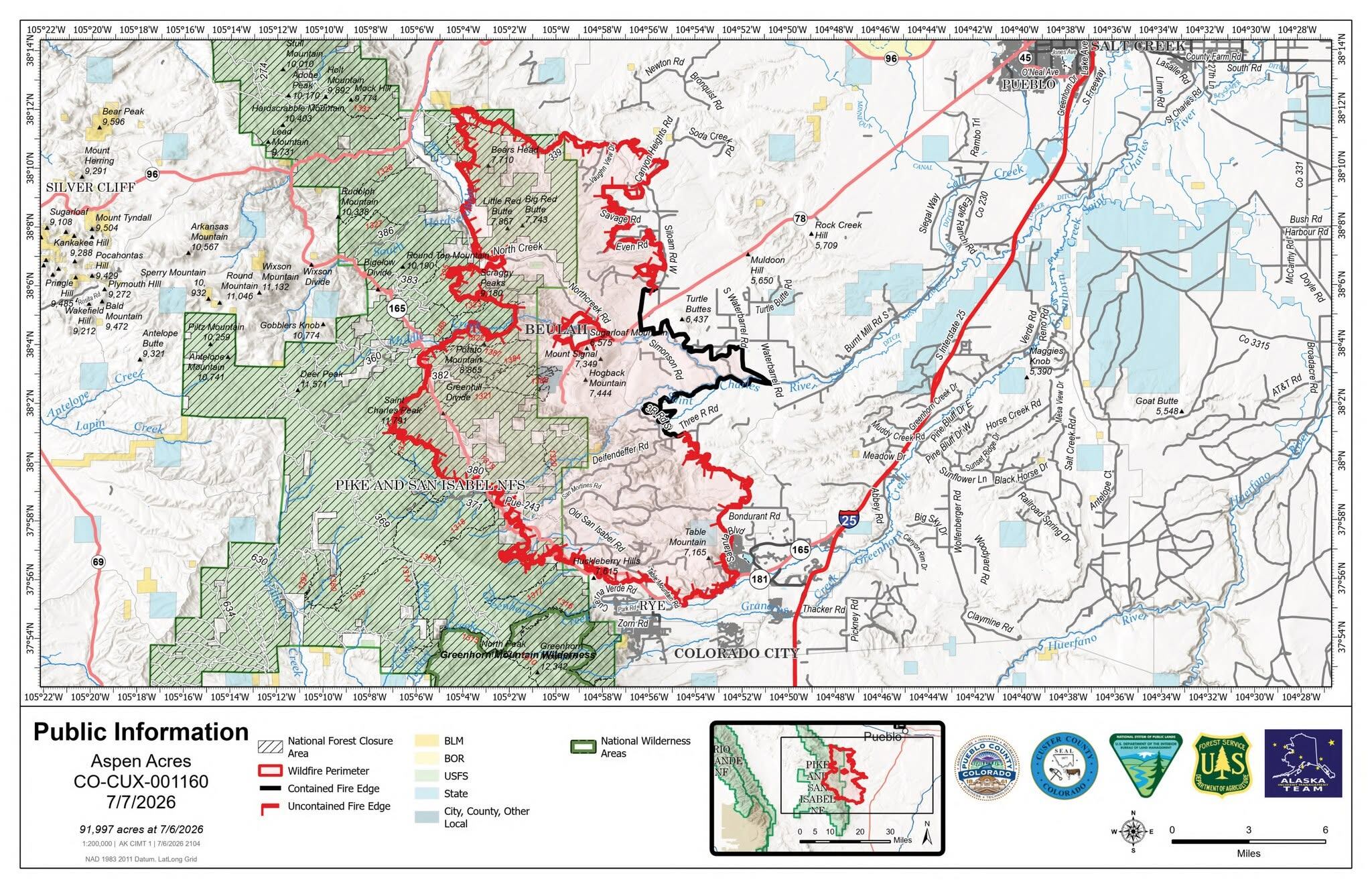
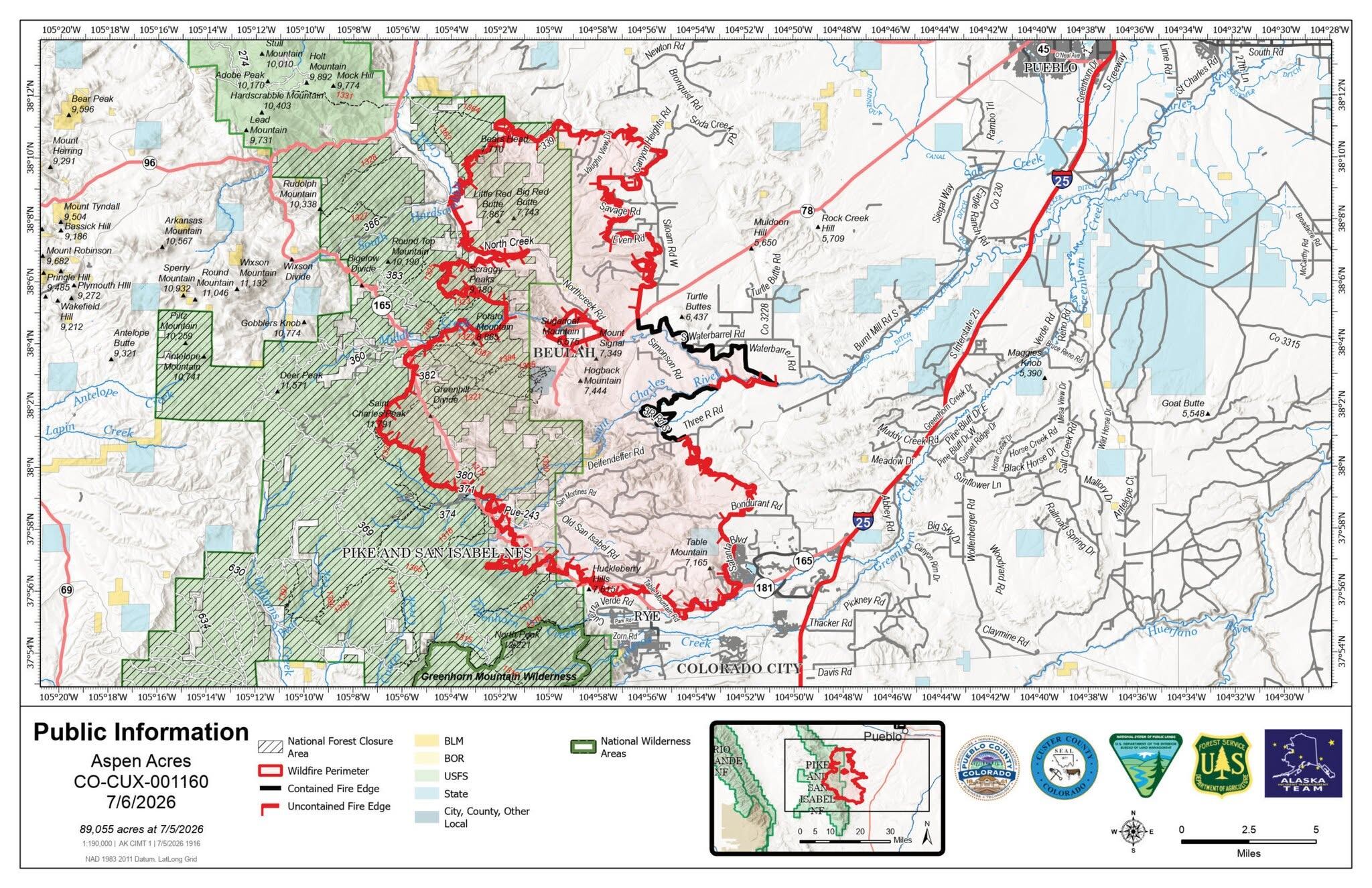
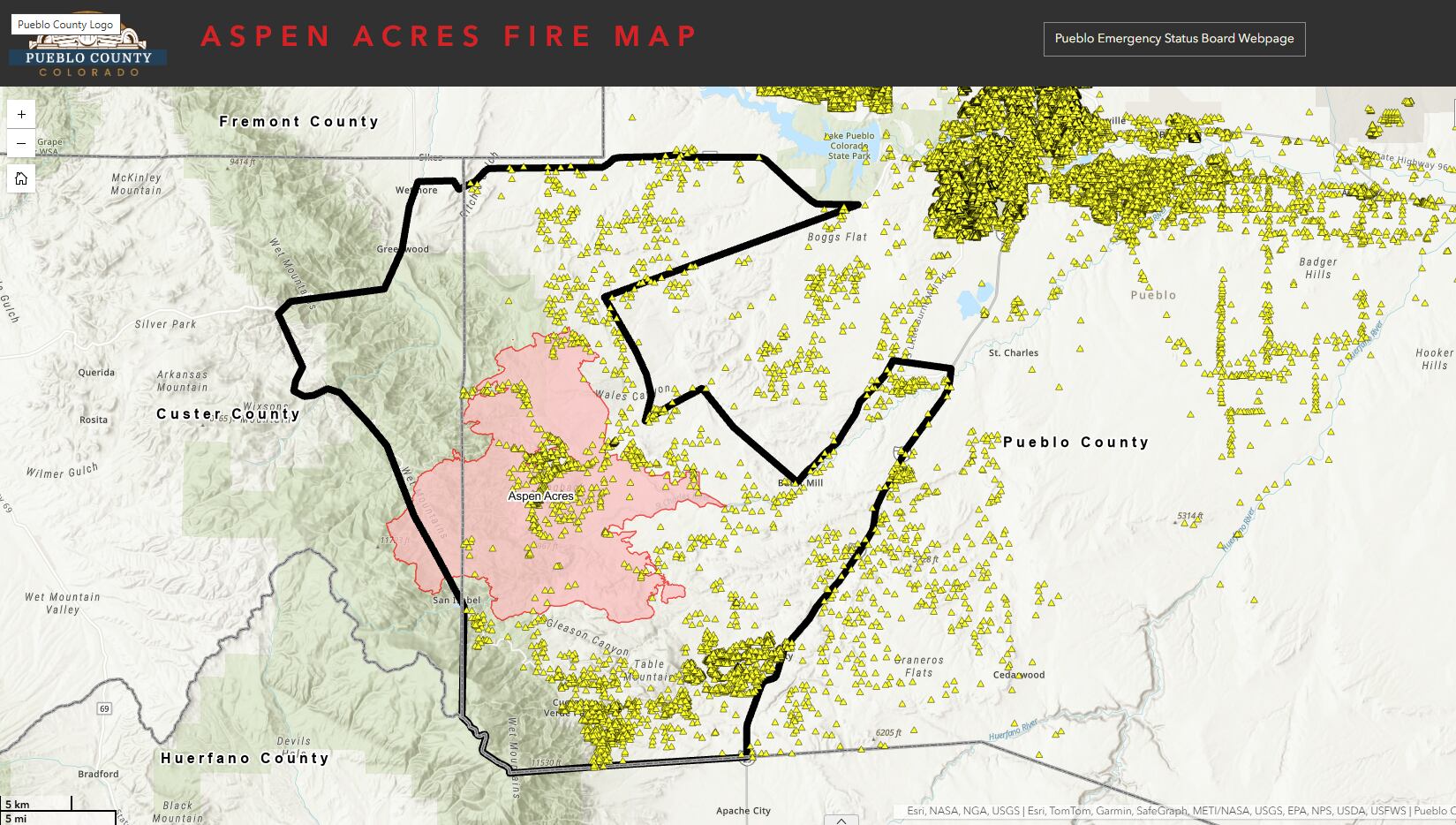
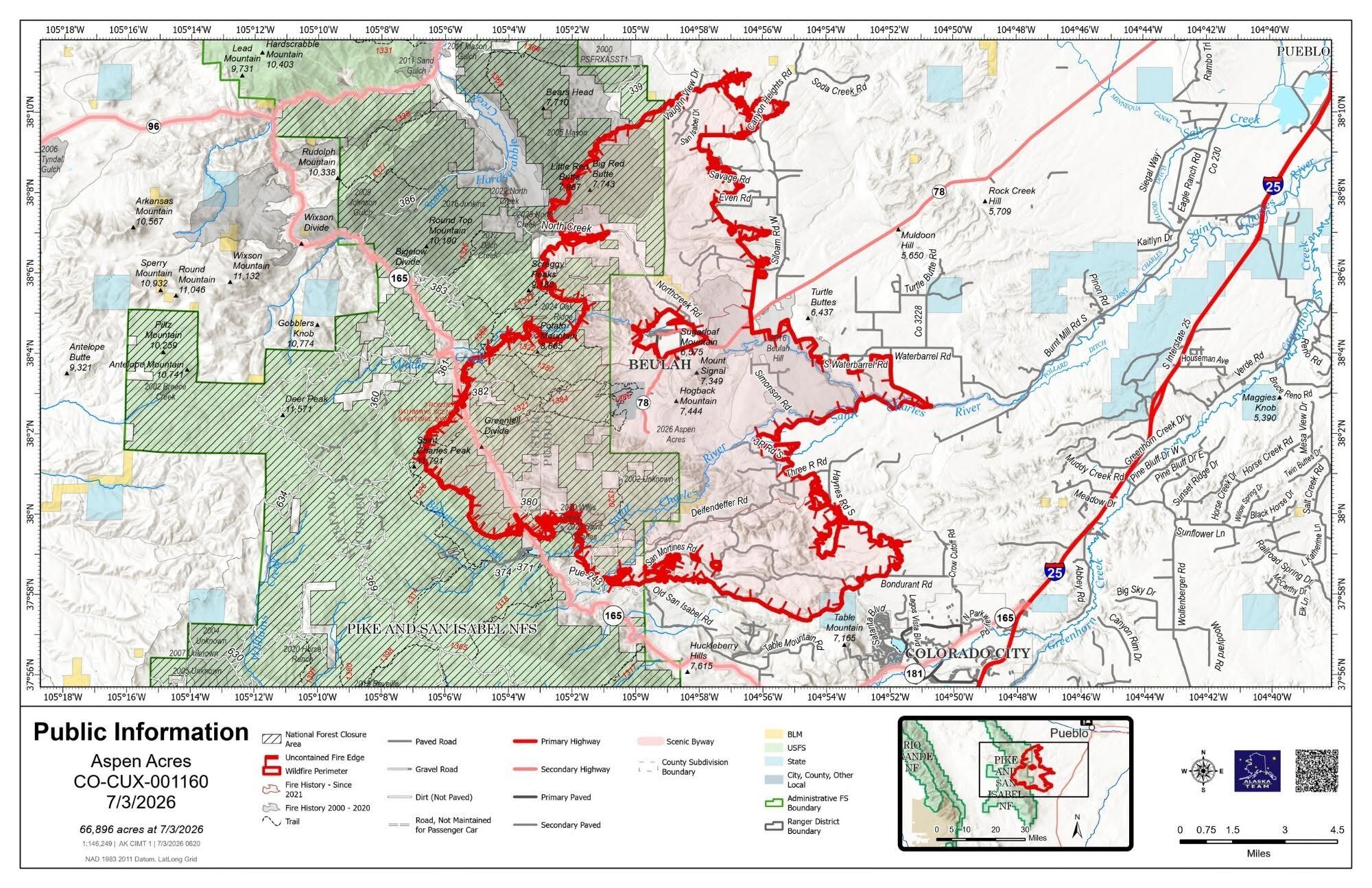
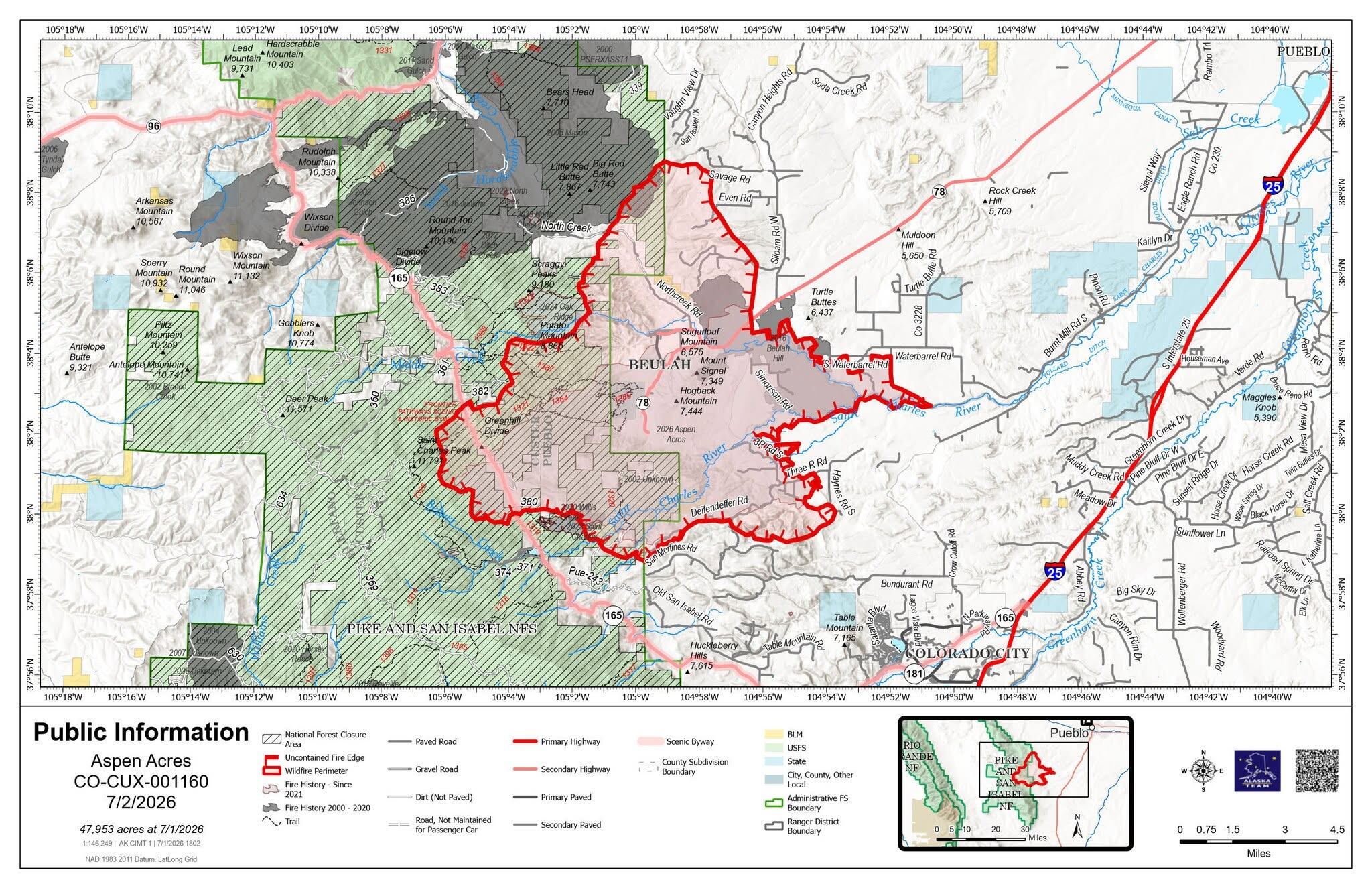
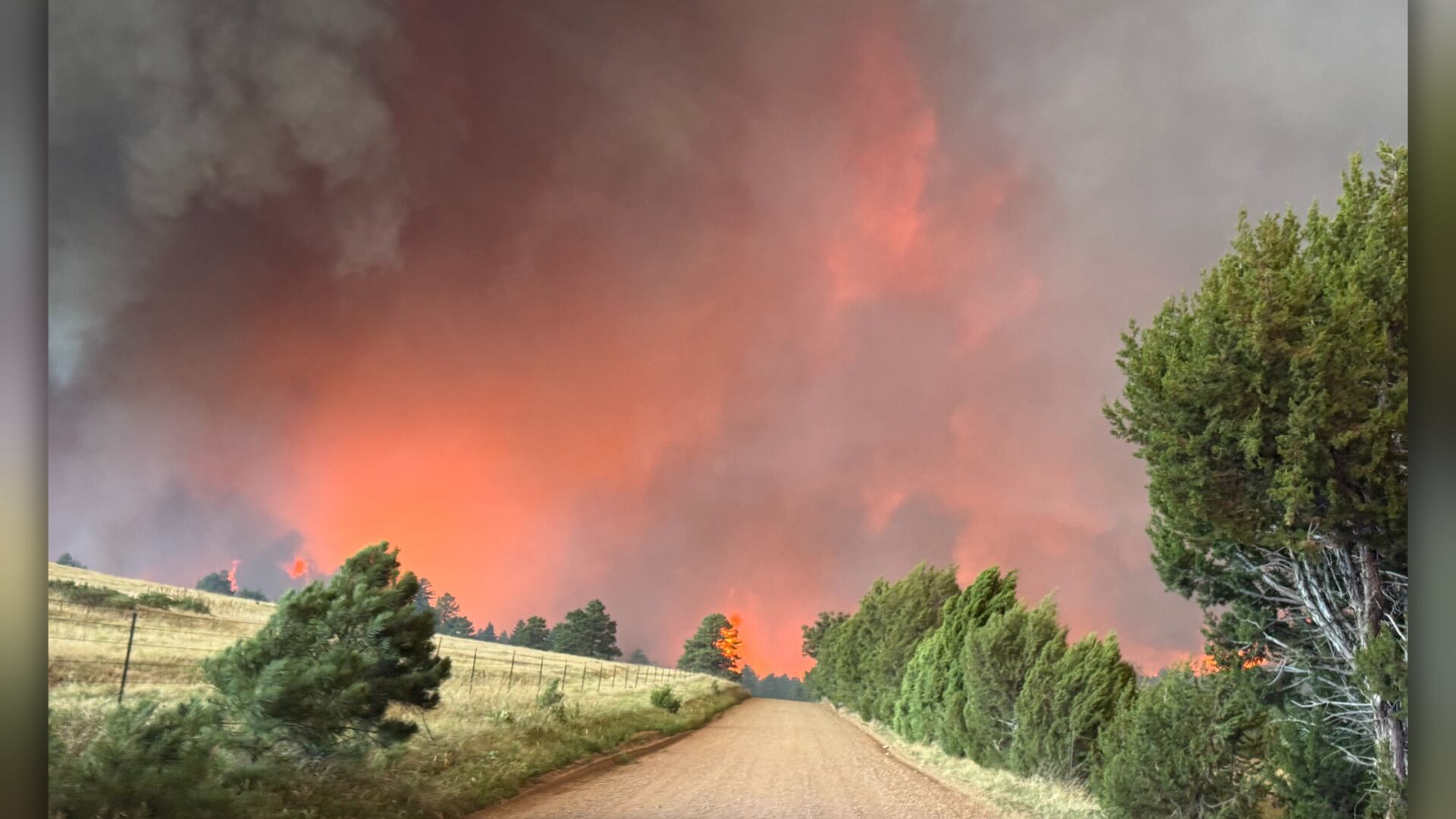
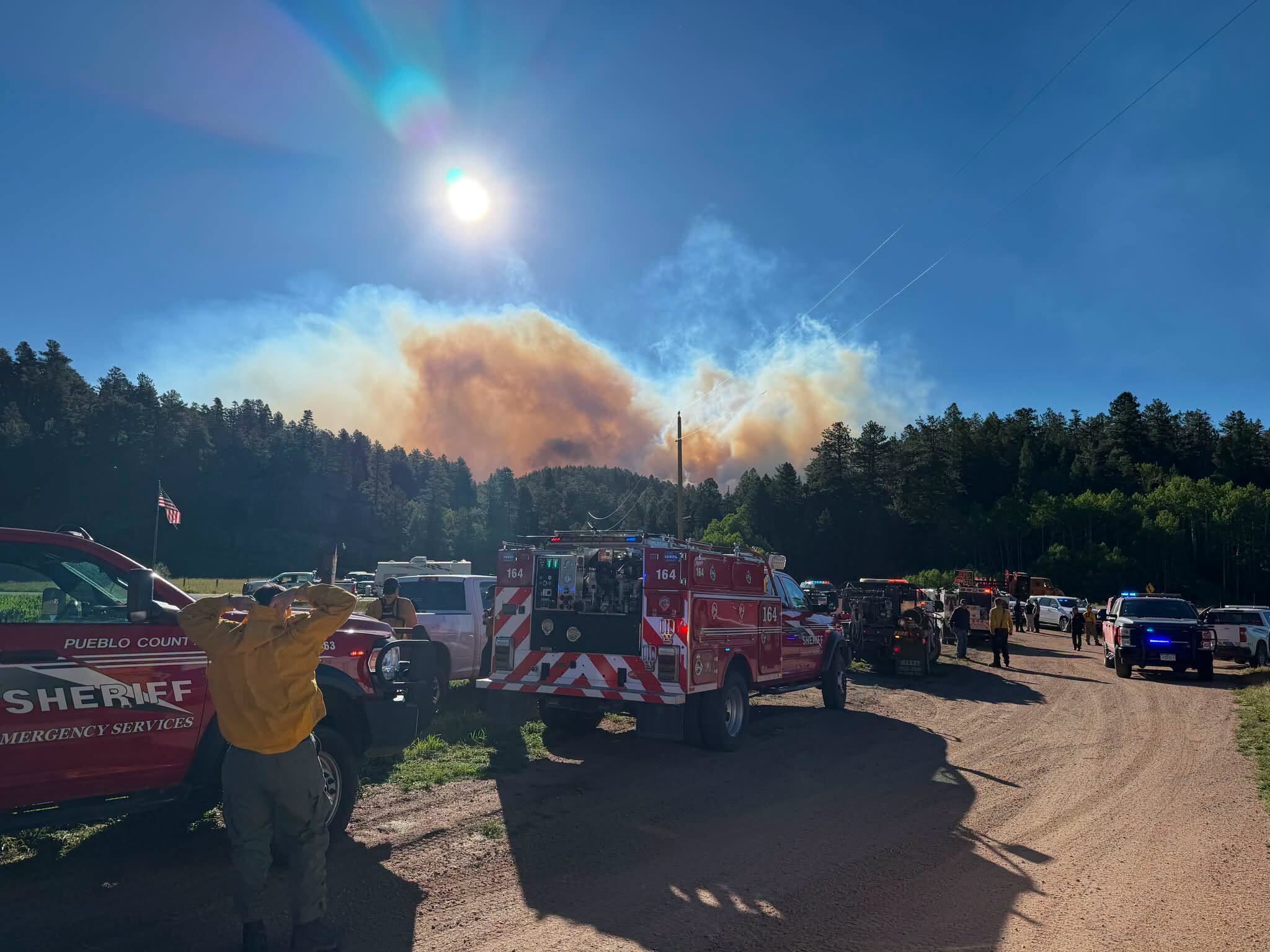
The Aspen Acres Fire, which has been burning in Pueblo and Custer counties in Colorado, continues to be a major concern for emergency management teams and local communities. As of the most recent updates, the fire is 82% contained and has burned 102,004 acres. The fire has been a significant challenge due to its size, difficult terrain, and unpredictable weather conditions. Over the past several weeks, the fire has seen varying levels of containment, with crews working tirelessly to suppress the flames and protect nearby communities.
Current Status and Containment Efforts
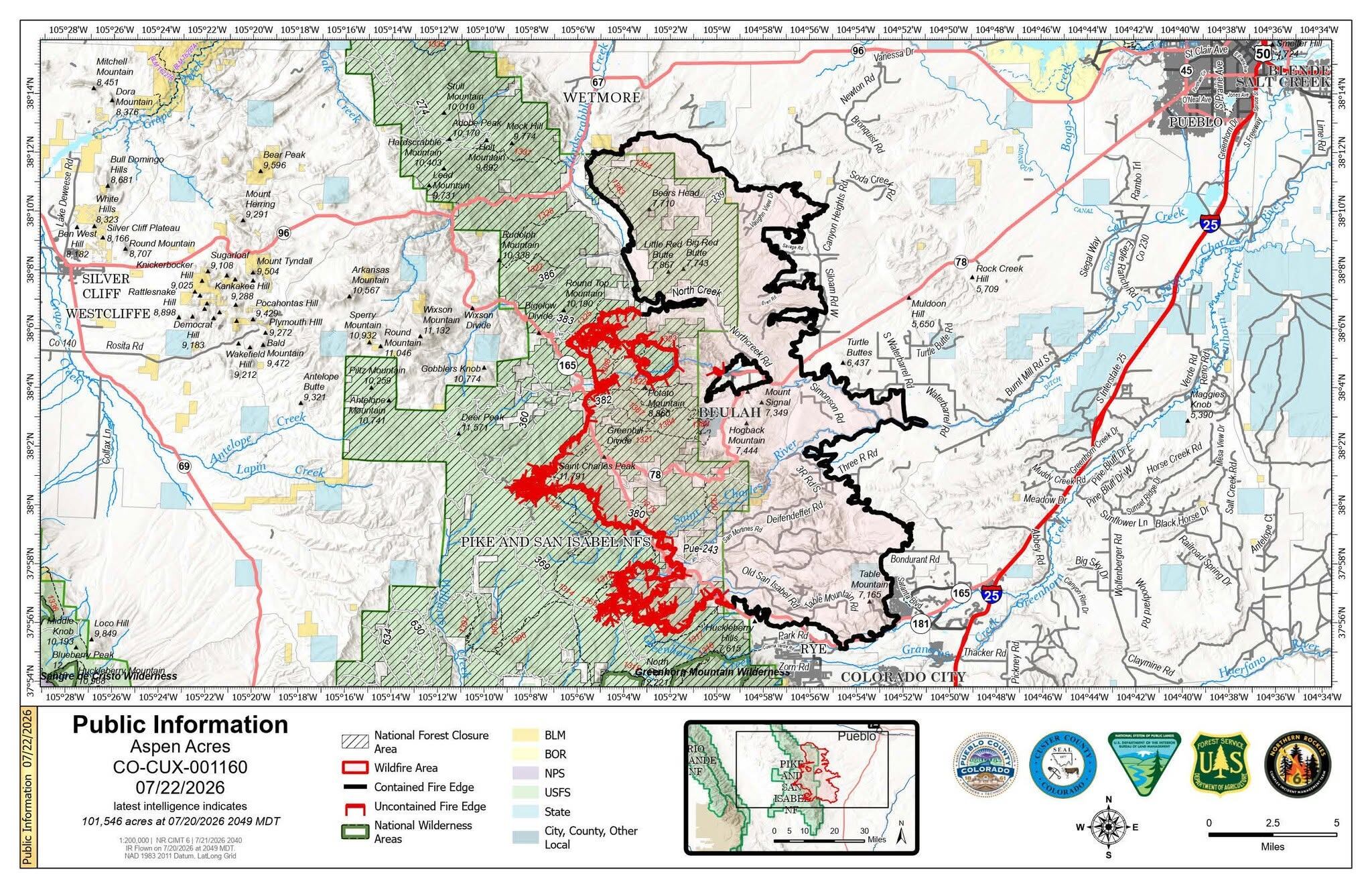
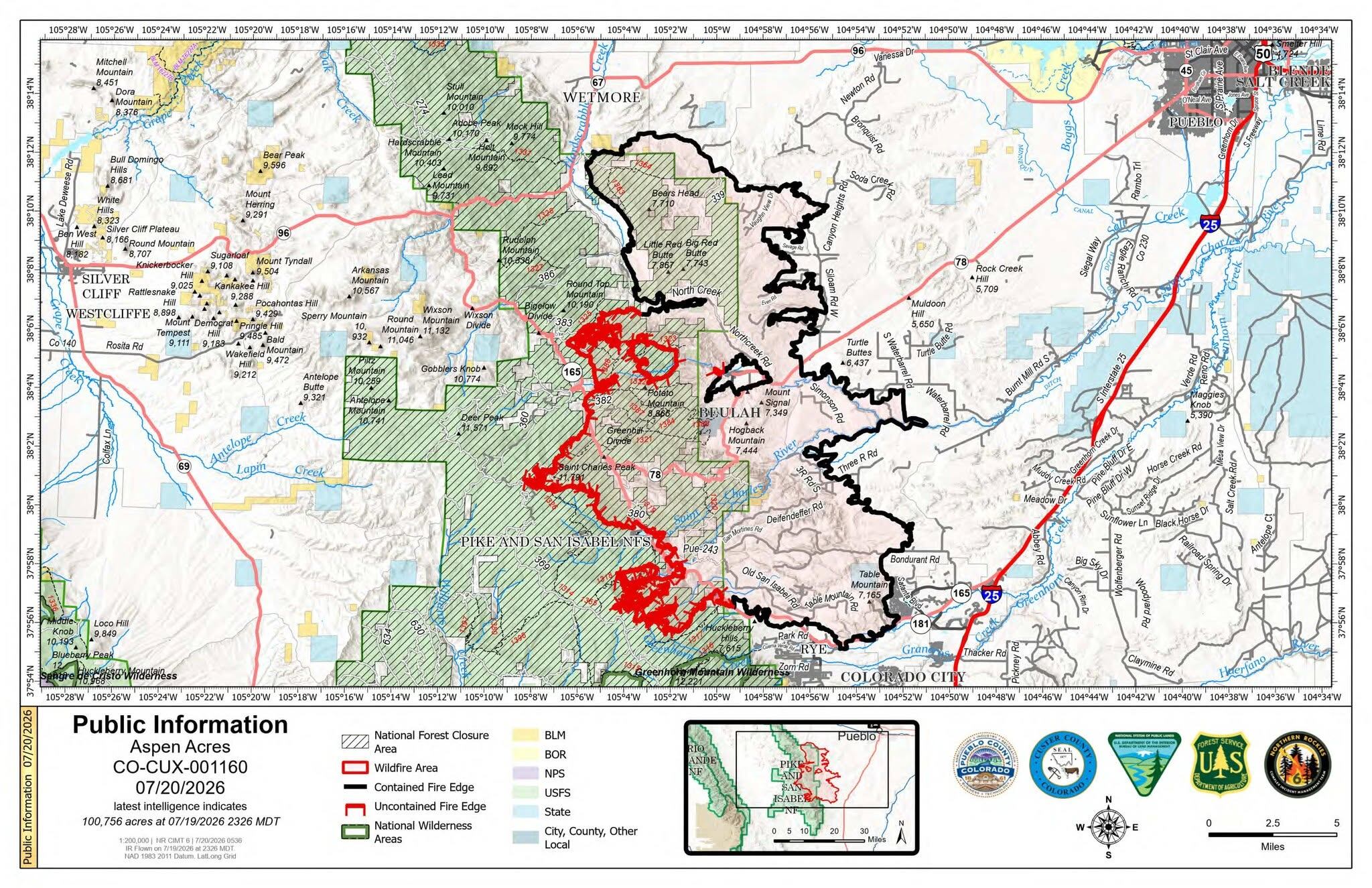
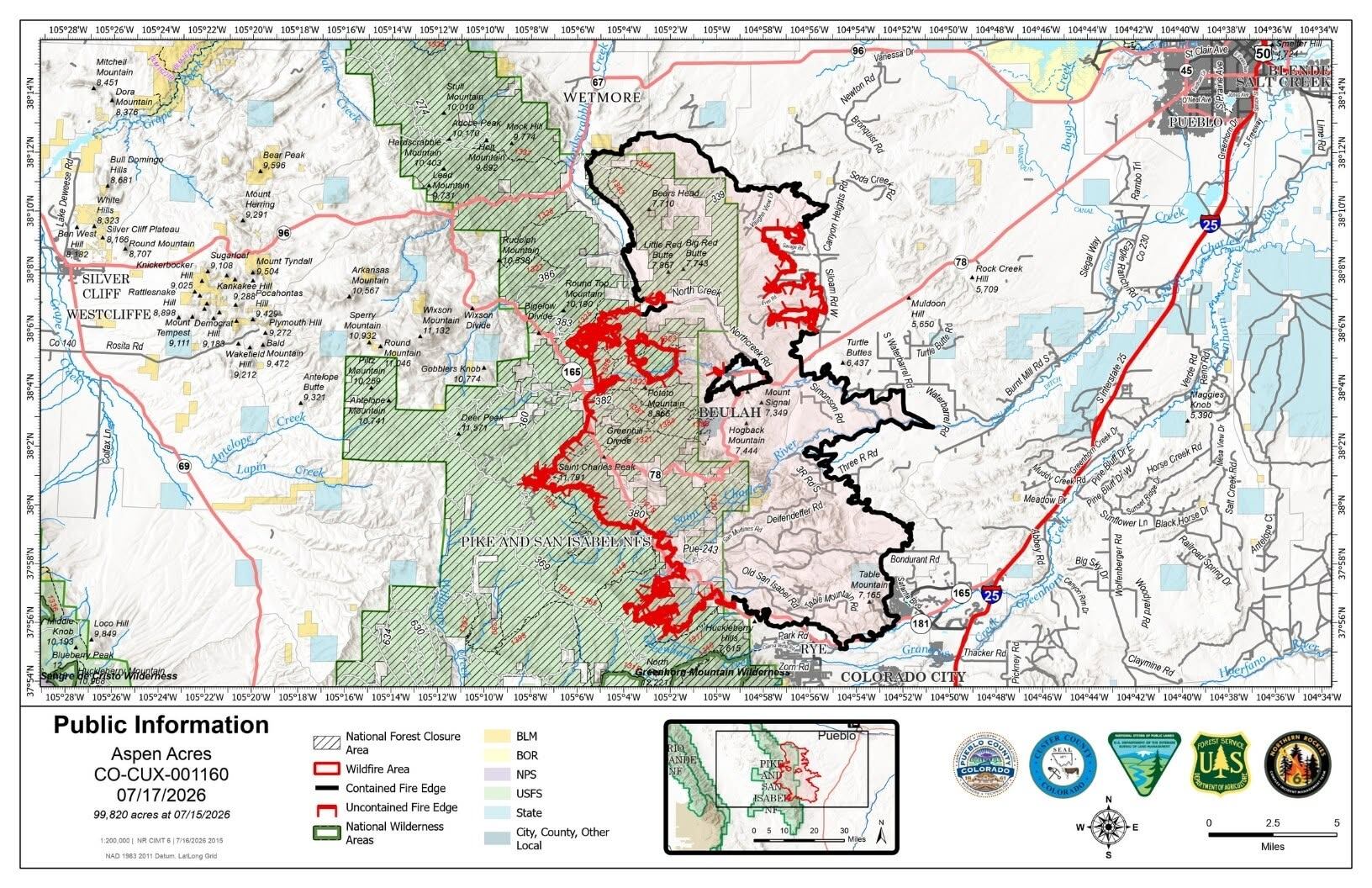
As of August 26, 2026, the fire is 82% contained, with 102,004 acres burned. A total of 153 crews are actively fighting the fire. However, areas above CO 165 remain difficult to access, prompting the use of aircraft, drones, and infrared detection to monitor and manage the fire. Ground crews have had to temporarily leave the mountain due to lightning and other weather conditions, highlighting the challenges faced by firefighters in this rugged terrain.
In the long term, fire leaders emphasize that work on the fire is essential for improving wildlife habitat, strengthening ecosystem resilience, and promoting long-term forest recovery. This includes critical repair work such as repairing fire lines, chipping brush, removing hazardous trees, and restoring areas damaged by fire suppression efforts. These actions help stabilize soils and protect waterways, reducing erosion and supporting the recovery of the affected forests.
Recent Updates and Progress
On August 21, the fire remained at 77% containment and 102,004 acres burned, with 135 personnel working on the fire. The Wyoming Type 3 Incident Management Team 7 reported steady progress, including work repairing fire lines and extinguishing sources of heat near existing lines. Crews were also engaged in “chipping brush, removing hazardous trees, repairing culverts, and restoring areas damaged by active fire suppression.”
On August 20, the fire remained at 72% containment and 102,004 acres. The Wyoming Type 3 Incident Management Team 7 noted that crews were making steady progress on critical repair work throughout the affected area, focusing on repairing areas impacted by firefighting operations. This includes reinforcing fire lines, chipping and reducing brush piles created during firefighting, and repairing culverts.
Ongoing Challenges and Weather Conditions
The Pike-San Isabel National Forest remains closed due to crews continuing to work with heavy equipment and some fire lines still needing to be repaired or reinforced. On August 18, the fire was still 102,004 acres and 72% contained, with 125 personnel working on the fire. Crews were making steady progress on critical repair work, focusing on areas impacted by firefighting operations.
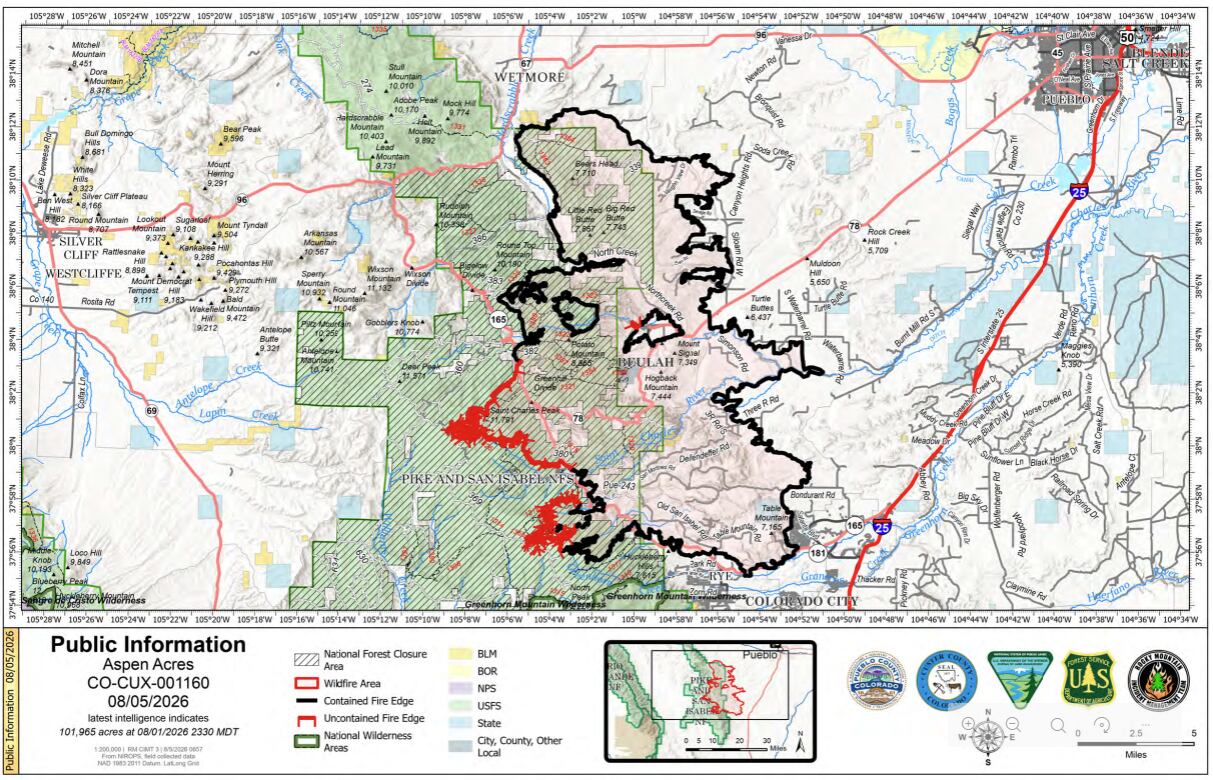
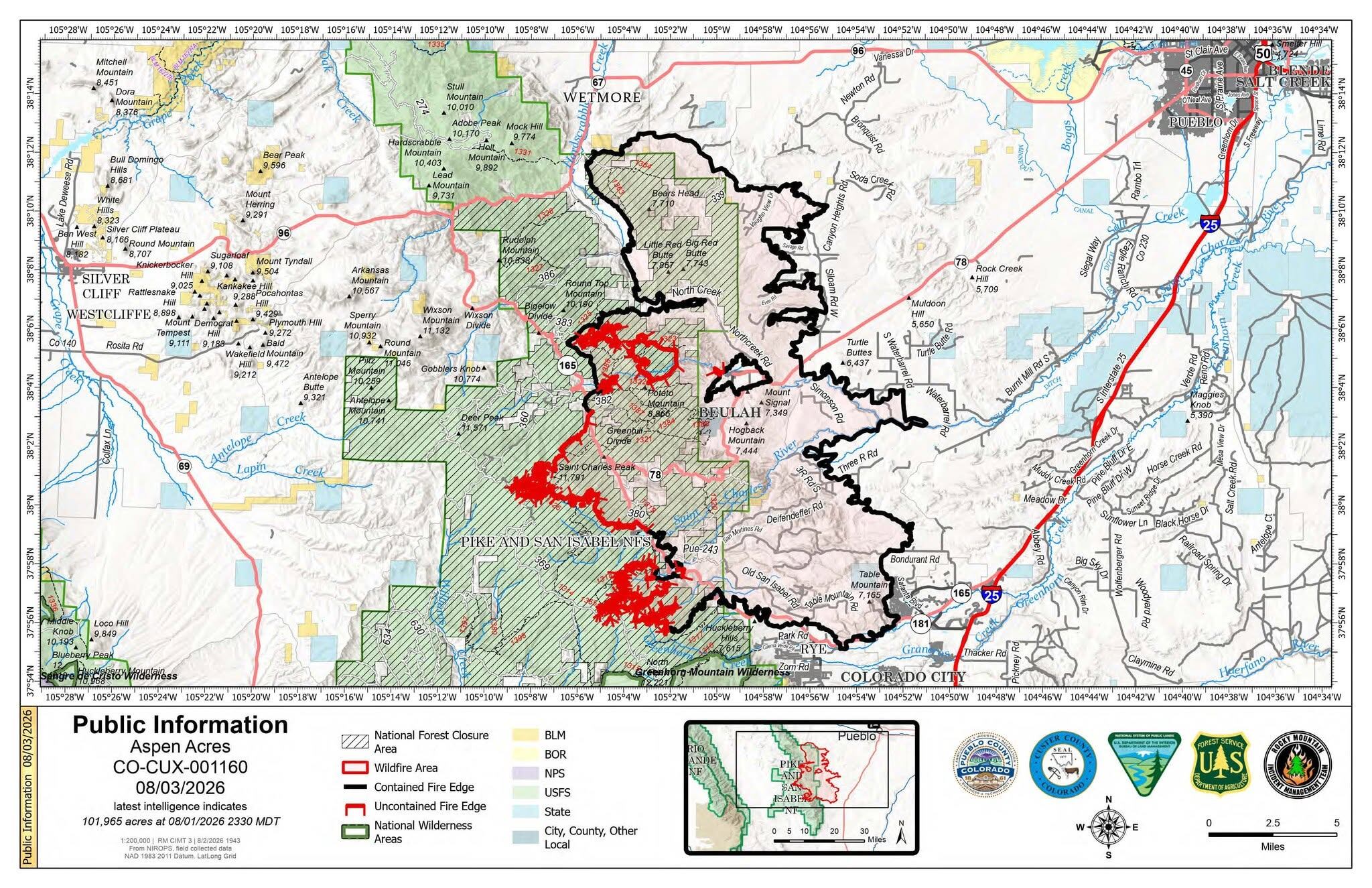
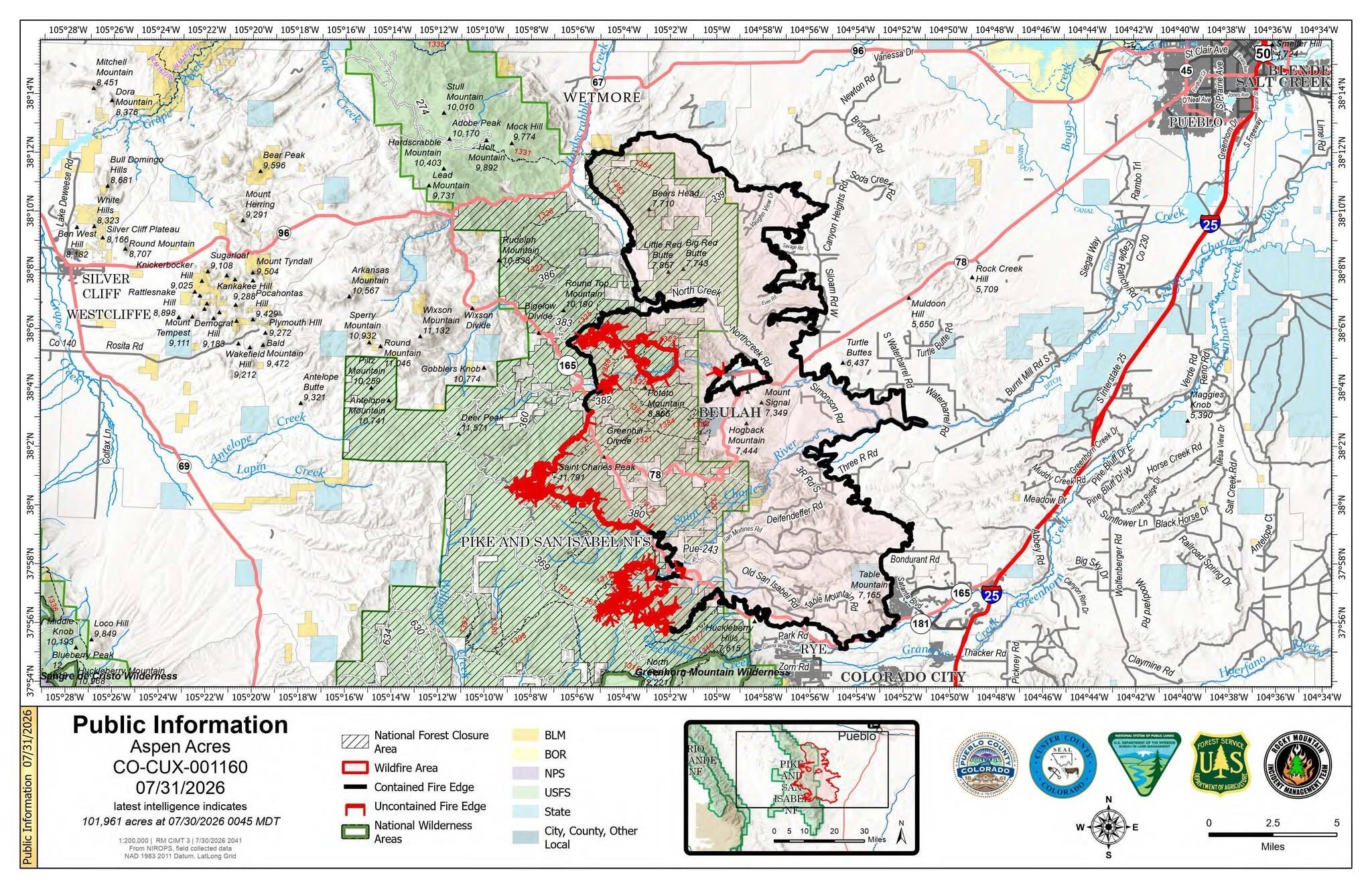
Despite these efforts, the fire continues to pose risks, particularly in the southwest portion of the fire area, where small pockets of fire activity are visible. This behavior is expected during remaining wildfire suppression and suppression repair operations, as unburned fuels, heavy vegetation, and residual heat sources continue to smolder or burn near the fire perimeter. The presence of smoke columns does not indicate an increase in overall fire intensity, a loss of containment, or a heightened risk of fire spread, according to officials.
Evacuation and Community Impact
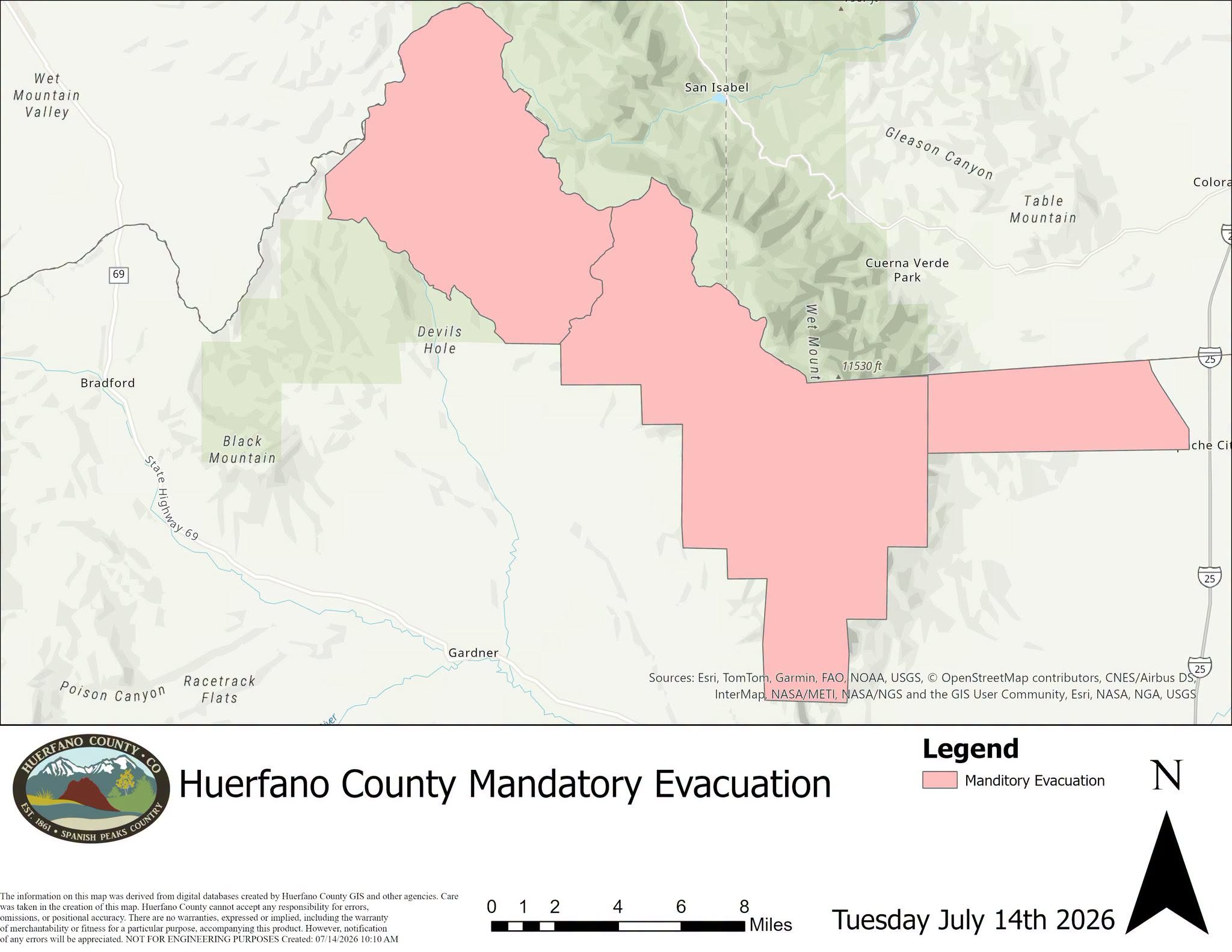
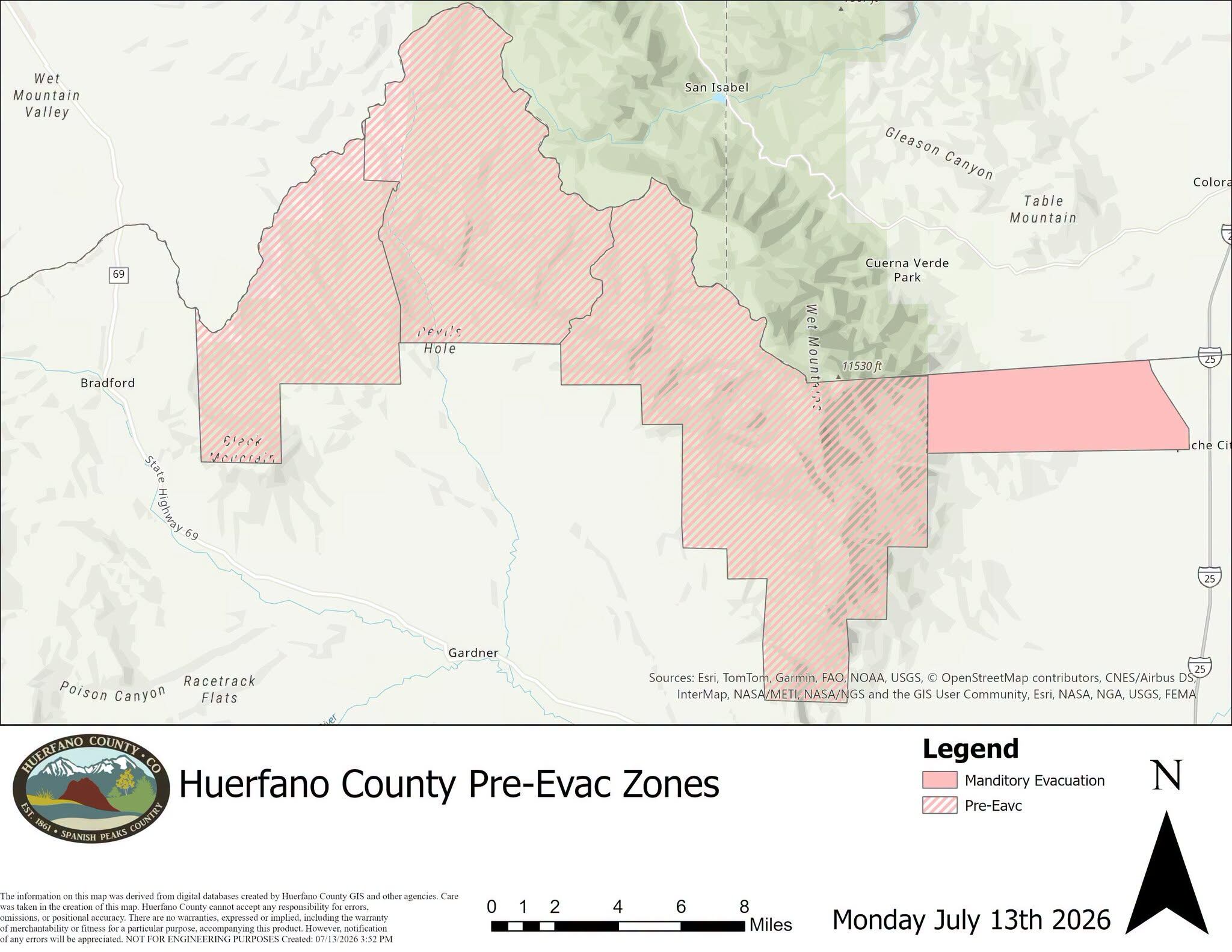
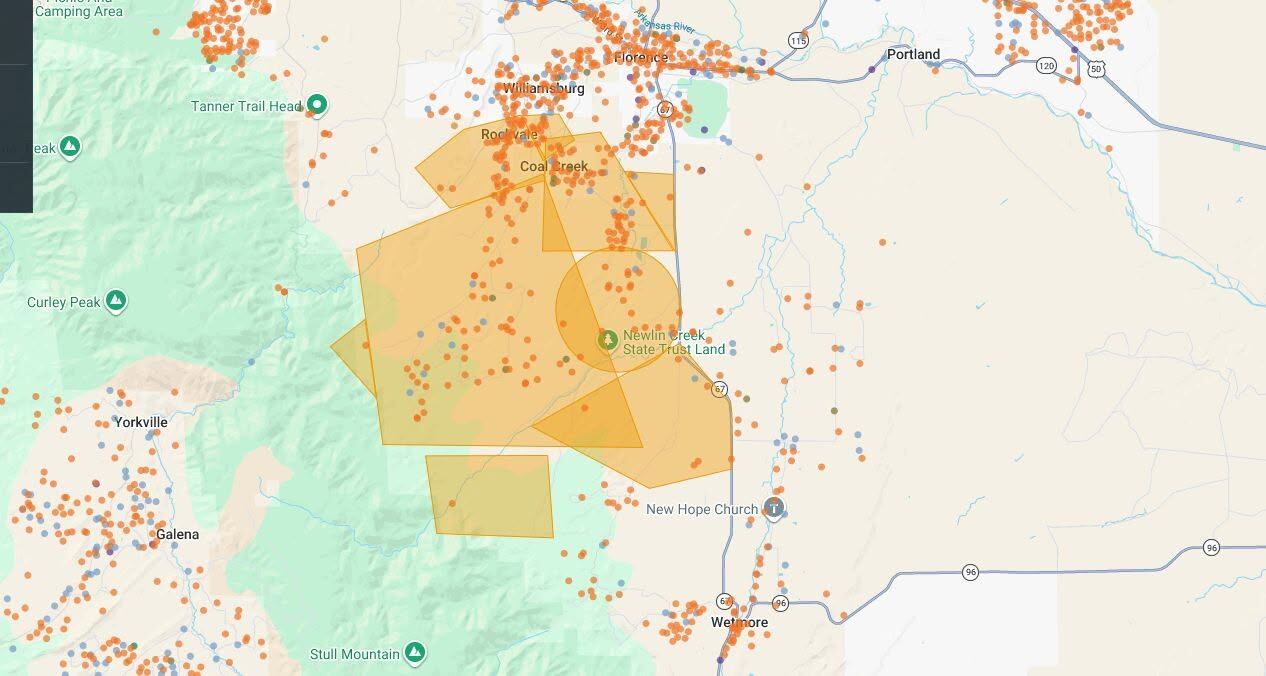
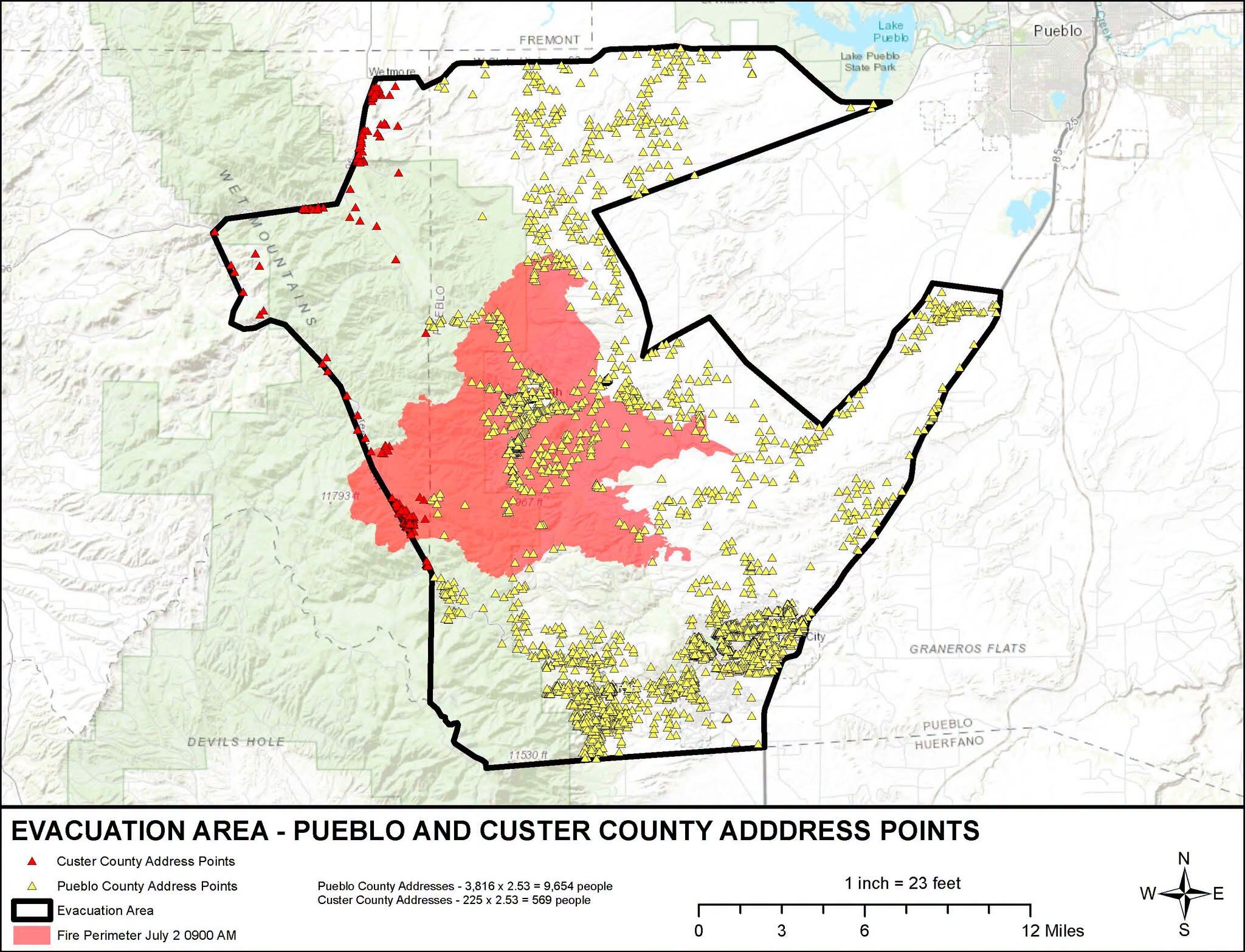
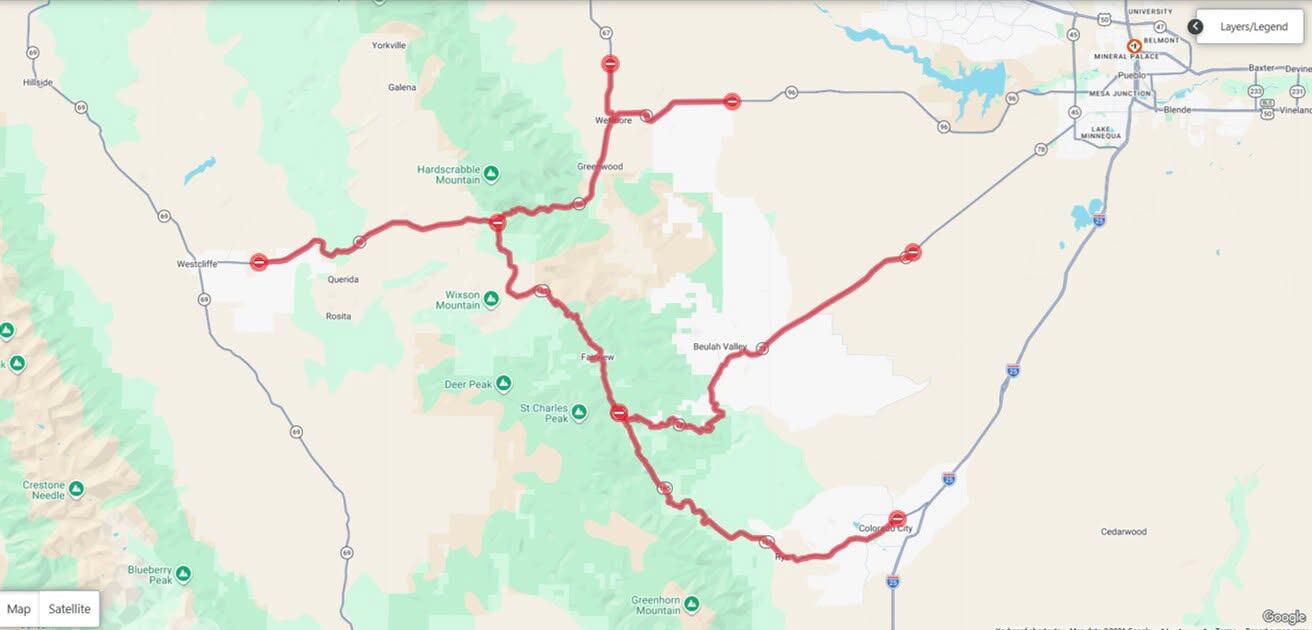
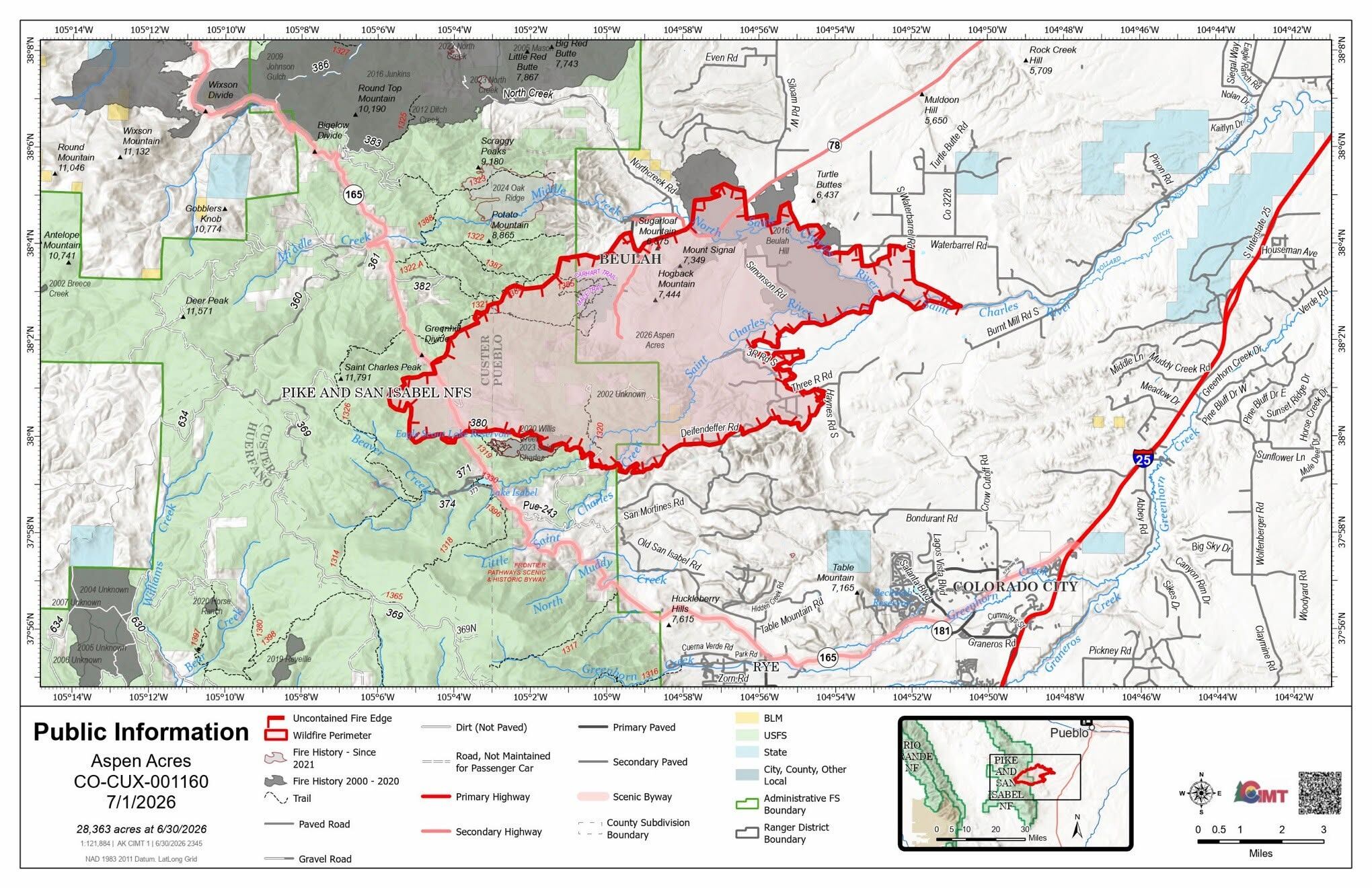
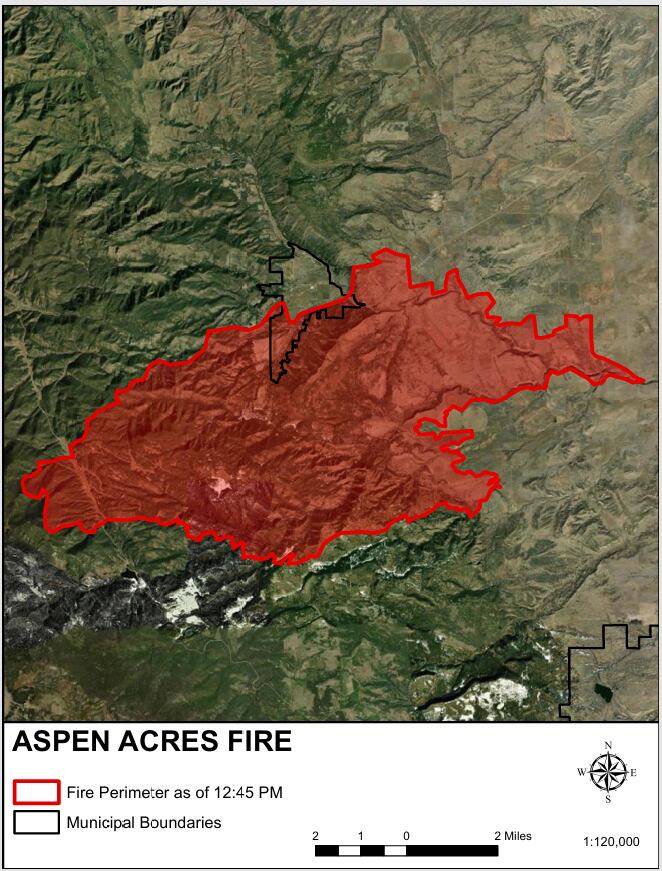
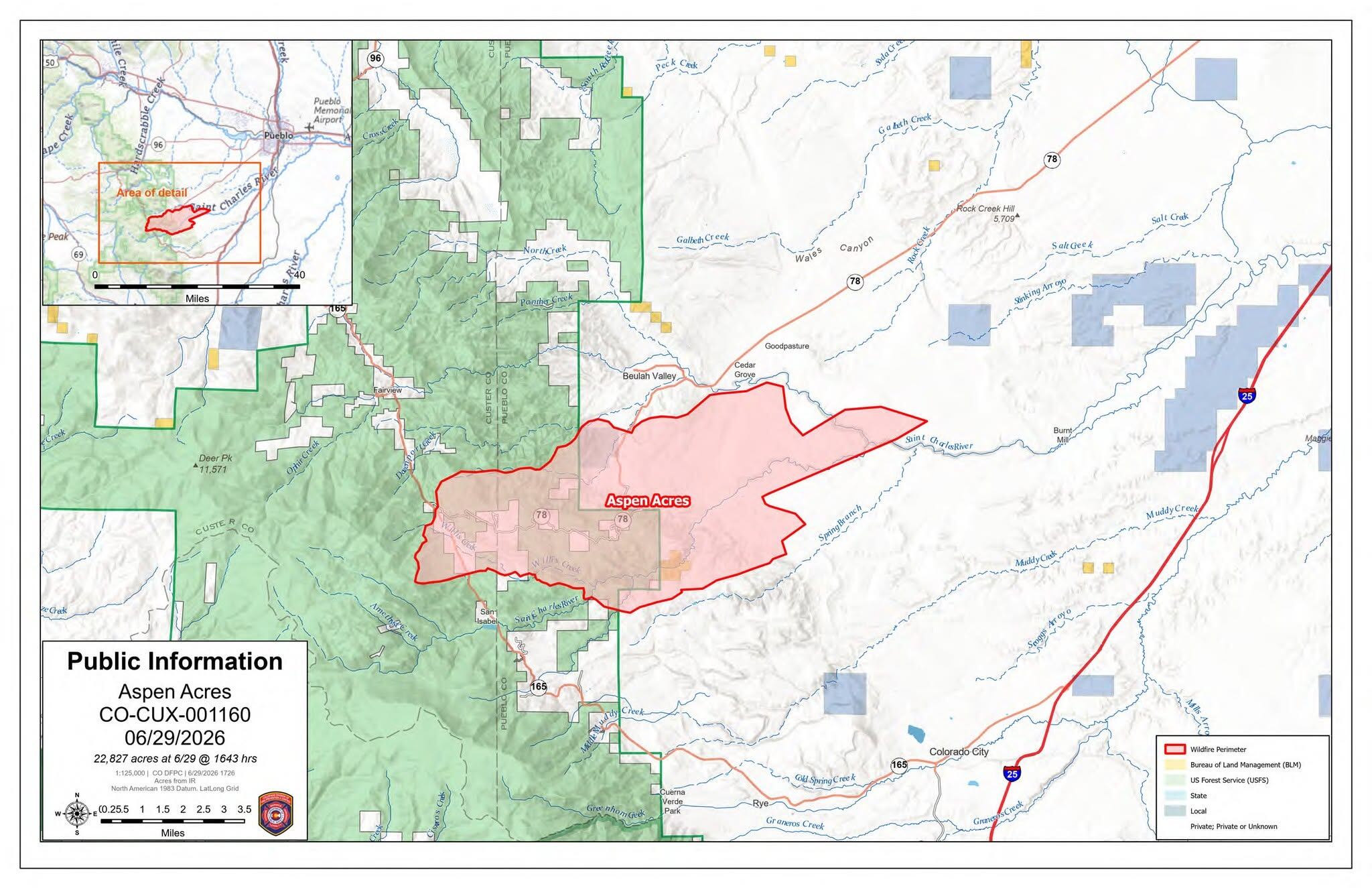
The fire has led to significant evacuations in several areas, including Beulah, Rye, and San Isabel. The Pueblo County Sheriff’s Office issued a mandatory evacuation for the entire community of Beulah, and Highway 165 was closed from the Pueblo County line to the Lake Isabel area. Evacuation shelters were set up at the Pueblo County Recreation Center and the Colorado State Fairgrounds, with specific instructions for livestock owners to bring their animals to the fairgrounds.
Fire officials have also warned residents about the potential for flooding due to the fire’s impact on the burn scar. Heavy rainfall is expected, which could lead to rapid runoff and increased potential for flooding in and around burned areas. Drivers are advised to be prepared for possible future road closures if rain passes through the burn scar area.
Community Response and Recovery
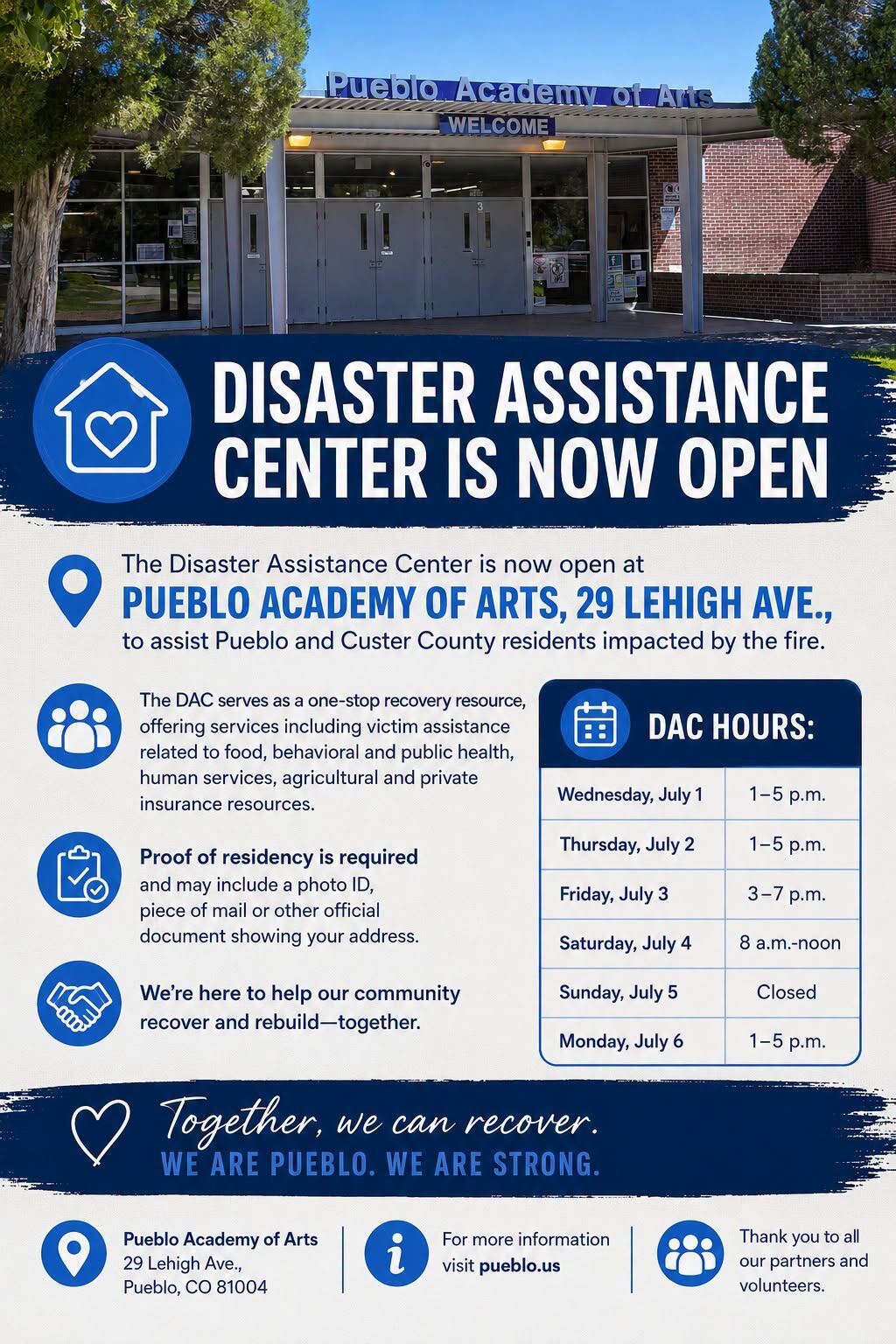
The fire has had a significant impact on the communities in the area, with many homes and structures destroyed. Emergency teams have been working closely with local authorities to provide support and resources to those affected. The Custer County Sheriff’s Office and the Pueblo County Sheriff’s Office have been instrumental in managing evacuations and providing information to residents.
In addition to the immediate response, long-term recovery efforts are underway. These include post-fire rehabilitation projects such as removing and chipping brush, repairing fences, and conducting structural assessments. Firefighters are also working to improve the width of firelines, mopping up from firing operations, and searching for and extinguishing heat sources.
Future Outlook and Continued Monitoring
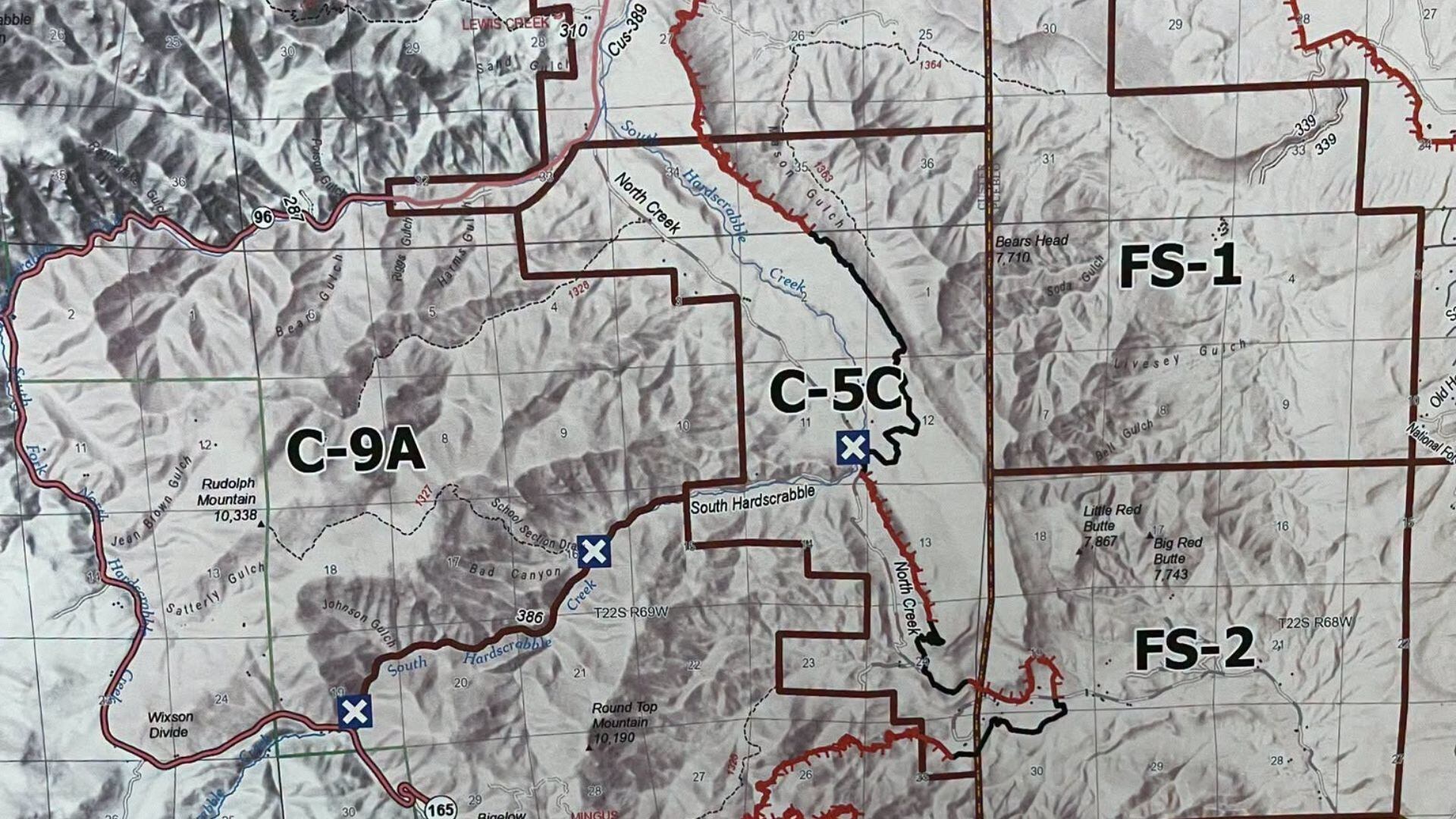
Fire officials have stated that the fire may remain active on the landscape until a season-ending moisture event occurs. The combination of steep, rocky, and hazardous terrain, along with standing dead trees, prevents the use of direct extinguishment tactics in the uncontained fire area, creating unsafe conditions for firefighters and limiting the ability to safely deploy and extract personnel and equipment.
As the fire continues to be monitored, officials remind residents to stay informed and follow all evacuation orders. The fire’s behavior can change rapidly, and it is crucial for residents to remain vigilant and prepared for any changes in the situation.
Conclusion
The Aspen Acres Fire has been a significant challenge for emergency responders and local communities. Despite the efforts of over 100 crews working to contain the fire, the situation remains dynamic, with ongoing efforts to protect lives, property, and critical infrastructure. As the fire continues to be managed, the focus remains on ensuring the safety of residents and the successful recovery of the affected areas.

Tinggalkan Balasan